

There is no single best pillow for everyone. Look for a comfortable pillow that helps keep your head and neck in a natural, neutral position in your usual sleep posture. Fit matters more than a marketing label: the right choice depends on how you sleep, your shoulder and head proportions, mattress feel and personal comfort.
What does neck support from a pillow actually mean?
For pillow shopping, “support” is best understood as how well the pillow holds your head comfortably without forcing your neck sharply upward, downward or forward. When you lie on your back or side, the aim is to keep your head reasonably aligned with the rest of your spine, rather than pushing your neck into an exaggerated curve.
- Fixed contour: Derila Ergo offers one defined shape. Check its size and trade-offs.
- Adjustable loft: Coop Original Adjustable lets you add or remove fill.
- Sized neck curve: TEMPUR-Neck has fixed height options; check sizing and return terms.
No pillow category is proven to treat neck pain. Prioritize a comfortable fit on your mattress.
Support is not the same as firmness. A very firm pillow can still be too high or too low, while a softer pillow may feel supportive if it compresses to a suitable height and stays comfortable. Likewise, a contour or “orthopedic” label describes a design intention, not proof that the pillow will relieve pain or work for every sleeper.
Ohio State Health & Discovery’s guidance on choosing a pillow emphasizes comfort, personal preference and head-and-neck position. Use those as the starting point before comparing materials or brand claims.
Pillow types and their trade-offs
Different constructions can feel quite different. No category is automatically best; the useful question is which design gives you a comfortable fit and the amount of adjustability you want.
Traditional rectangular pillows
These are familiar and come in many fills and heights. Some can be shaped by scrunching or folding, which can help people who like to adjust the pillow during the night. The trade-off is that the fill may move or flatten, so the support can change as you sleep.
Adjustable-fill pillows
These let you add or remove fill to change the loft and feel. That flexibility can be useful if you are still working out your preferred height or switch positions. Allow time for small adjustments and follow the maker’s care instructions; the first fill level may not be the final one.
Contoured or cervical pillows
These have a shaped profile, often with a higher area under the neck and a lower area for the head. They can appeal to sleepers who like a defined place for the head and neck. The shape is less forgiving if the contour or height does not match your body or usual position, and it may feel unfamiliar at first.
Cooling-focused designs
Cooling covers, ventilation channels or particular foams may appeal if you tend to feel hot. They are separate considerations from neck support: confirm that the pillow’s height and feel are right before paying extra for cooling features. “Cooling” descriptions also vary by product, so check what the construction actually includes.
Match a pillow to your sleep position
Your main sleep position is a practical way to narrow the options. These are starting points rather than medical rules; check how the pillow feels on your own mattress and if you change positions overnight.
| Sleep position | What to look for | Potential mismatch |
|---|---|---|
| Side sleeping | Enough loft to fill the gap between your head and mattress while keeping your head in line with your torso. | A pillow that is too low may let the head dip; one that is too high may push it upward. |
| Back sleeping | A moderate, comfortable profile that supports the neck without forcing the chin toward the chest. | A tall or stiff contour may tip the head forward; an overly flat pillow may leave the neck feeling unsupported. |
| Stomach sleeping | If you continue to sleep on your stomach, a low, compressible pillow may reduce how far the head is tilted. | A thick pillow can increase the angle at which the neck is turned. Consider whether gradually changing position is comfortable and realistic. |
| Combination sleeping | A shape that remains comfortable as you roll, or adjustable fill that can be tuned to your most common positions. | A pronounced contour or very specific loft may suit one position but feel awkward in another. |
Harvard Health notes that side and back sleeping can be easier on the neck for many people, while stomach sleeping commonly involves turning the head to one side. Its guidance on sleeping with neck discomfort is a useful starting point, but it is not a substitute for individualized care.
Height, firmness and mattress fit
Height (often called loft) describes how thick a pillow is; firmness is how resistant it feels when you press or lie on it. They are related, but not interchangeable. The height that matters is the effective height after the fill or foam compresses under your head.
Your mattress changes the gap the pillow needs to fill. A shoulder may sink farther into a softer mattress and less into a firmer one, which can change how much pillow height feels comfortable. Shoulder width, head size and how close you draw the pillow to your neck also affect the fit. That is why a measurement on the product page cannot tell the whole story.
Rather than chasing a universal height or firmness rating, lie in your usual position on your own mattress. Check whether your head seems level with your torso, whether the pillow holds a comfortable shape, and whether you feel pressure that makes you want to move away from it.
For a more detailed walkthrough of loft, shoulder width and mattress sink, see our pillow height guide. For the broader buying decision, start with how to choose a pillow.
Materials: comfort and trade-offs
- Memory foam: often has a more shaped, slow-response feel and can hold a defined profile. Some sleepers find it warmer or dislike the close-contouring sensation.
- Latex: often feels springier and returns to shape more quickly. The feel, weight and price vary by construction.
- Fiber or down alternative: commonly soft and easy to fluff, but may need reshaping and can change loft with use.
- Down or feather: can be moldable and compressible. Feel and support vary widely, and some shoppers prefer to avoid animal-derived fill.
- Shredded foam or mixed fill: may allow adjustment and a blend of softness with structure, but fill distribution and maintenance matter.
Material alone does not determine support. Check the height, how easily the fill compresses, whether it can be adjusted, how the cover is cleaned, and what the seller says about returns. If you sleep hot, review the full construction and cover rather than assuming one material will always feel cool.
A five-minute fit check
Before committing to a new pillow, try this simple check on your usual mattress. It cannot diagnose the cause of discomfort, but it can help you notice obvious fit issues.
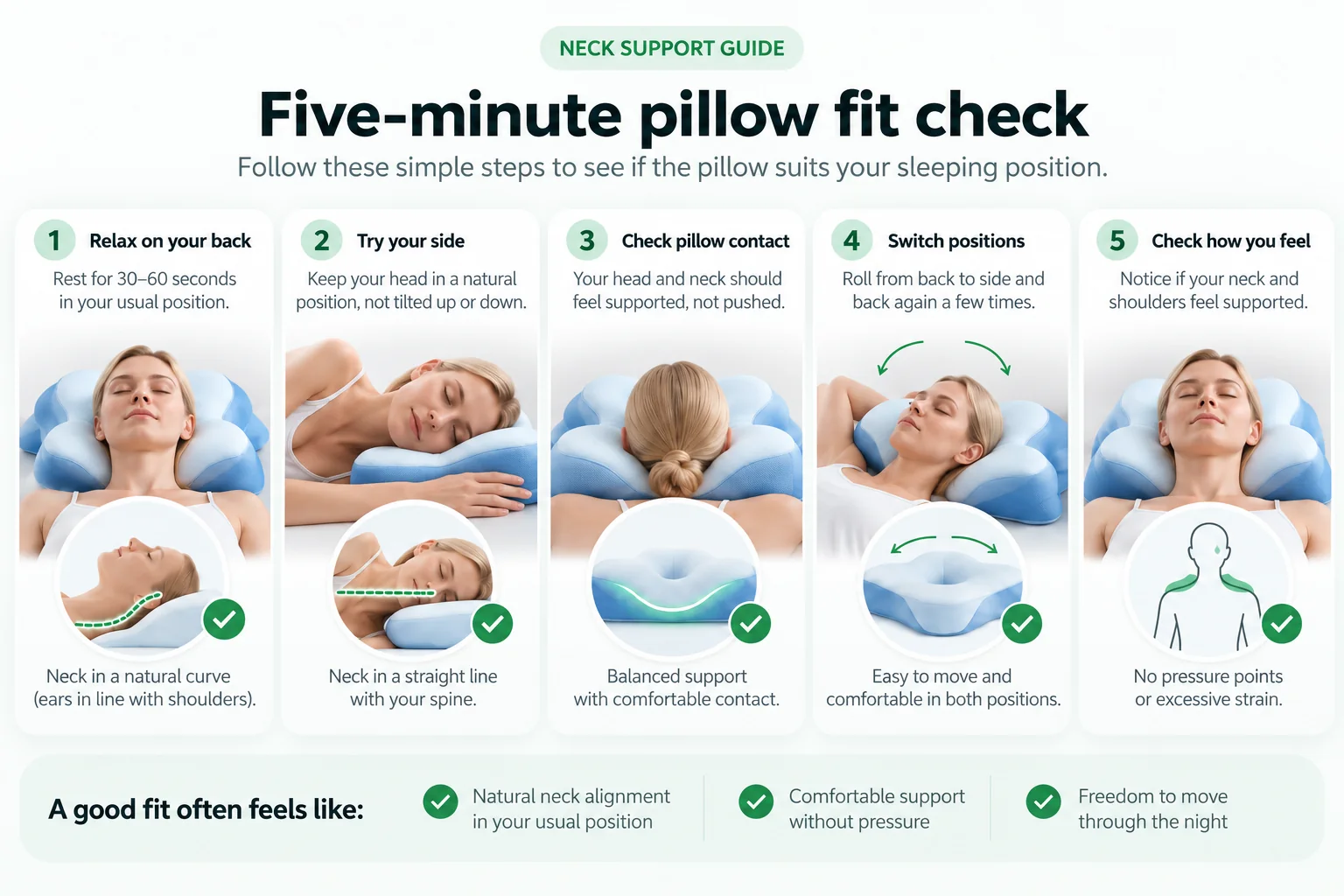
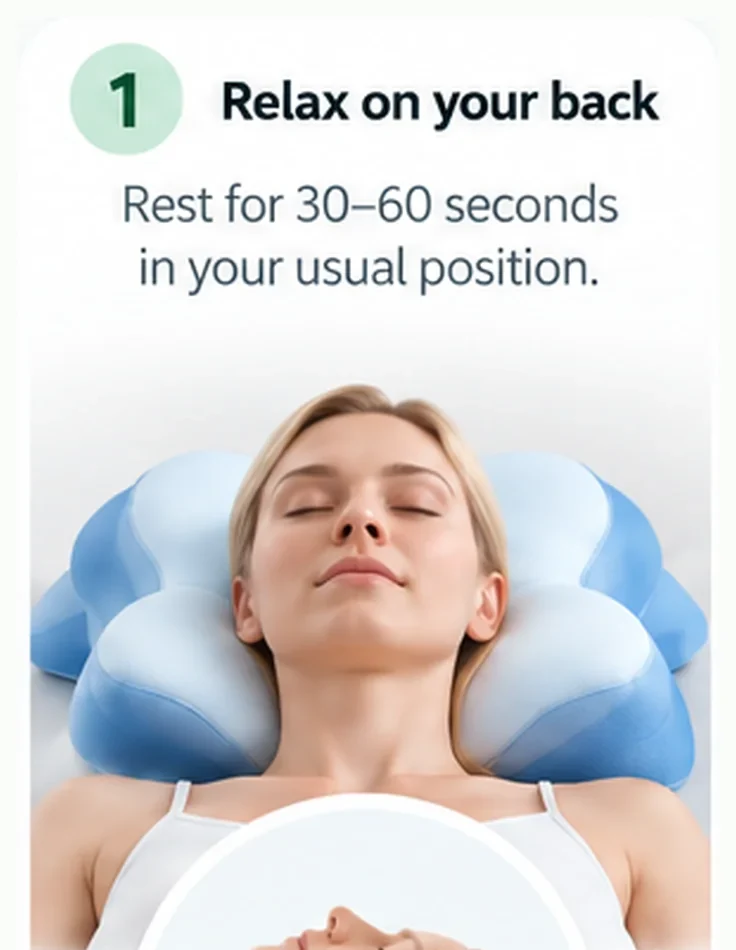
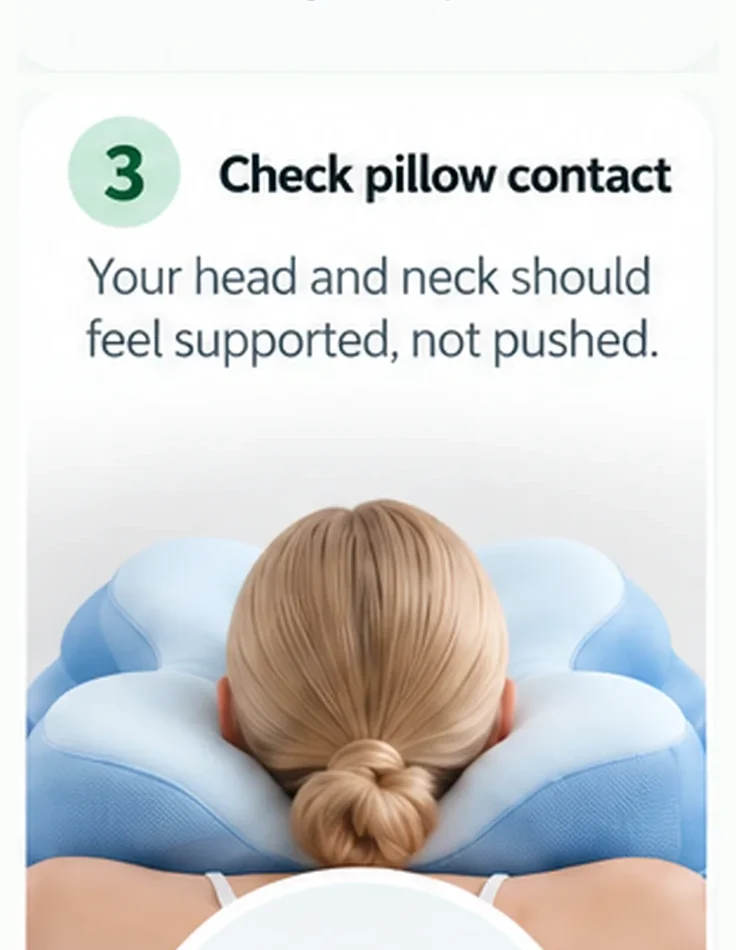
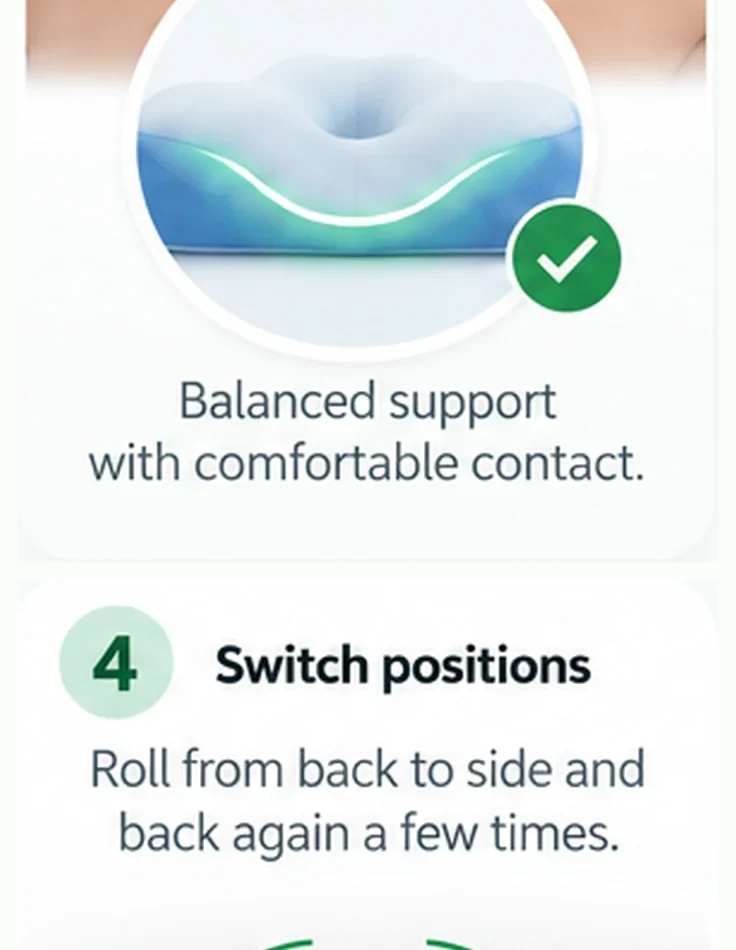
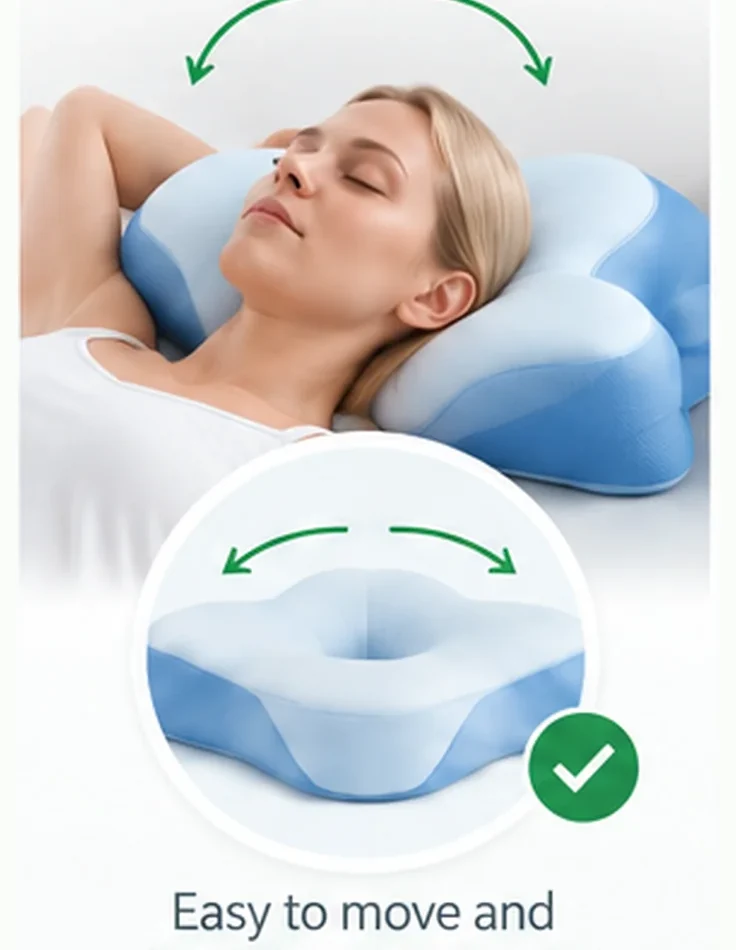

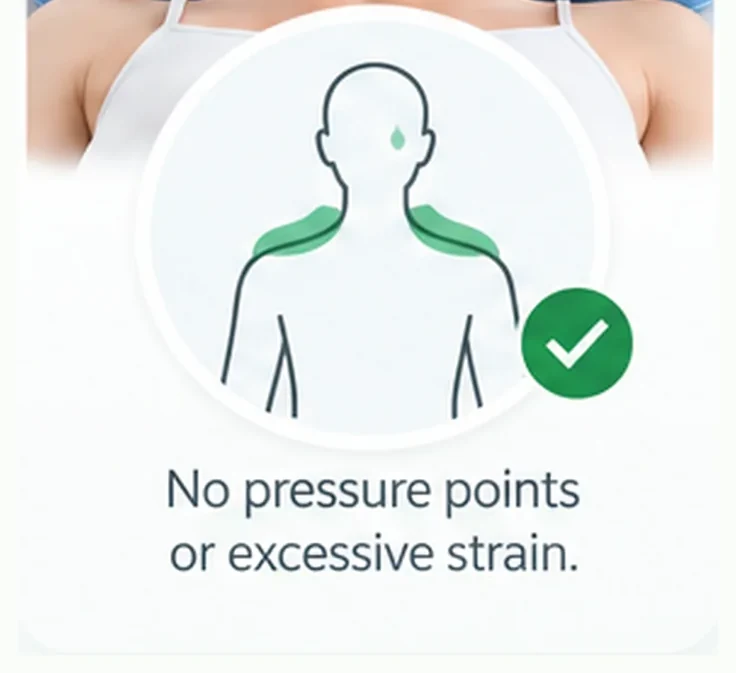
Settle into your usual position
Use the mattress, pillowcase and sleep position you normally use. Give the fill a moment to settle instead of judging it as soon as you lie down.
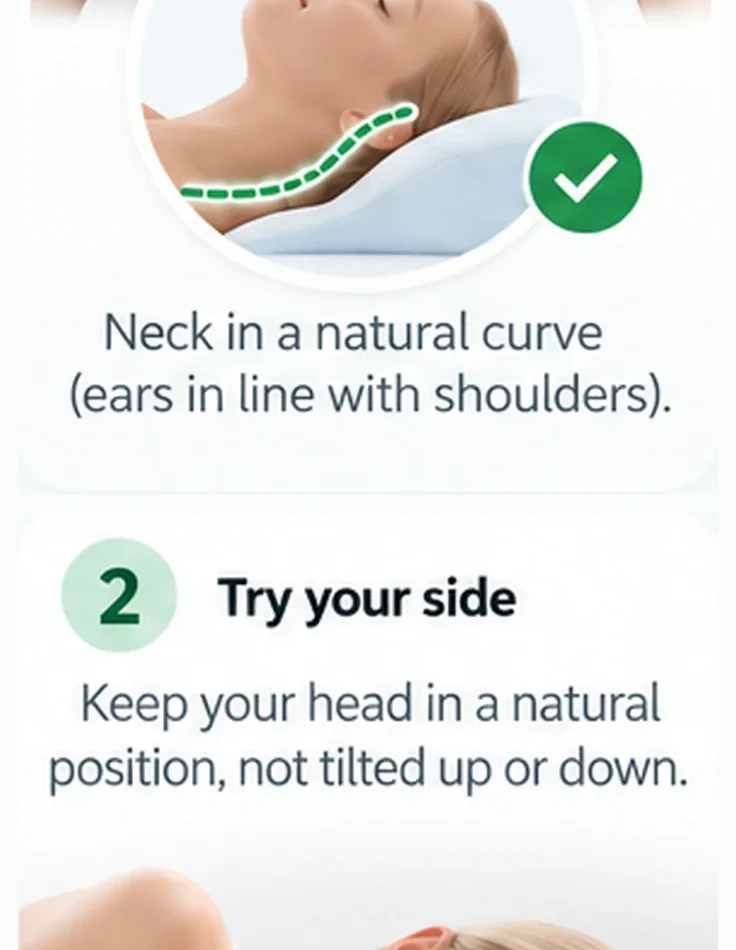
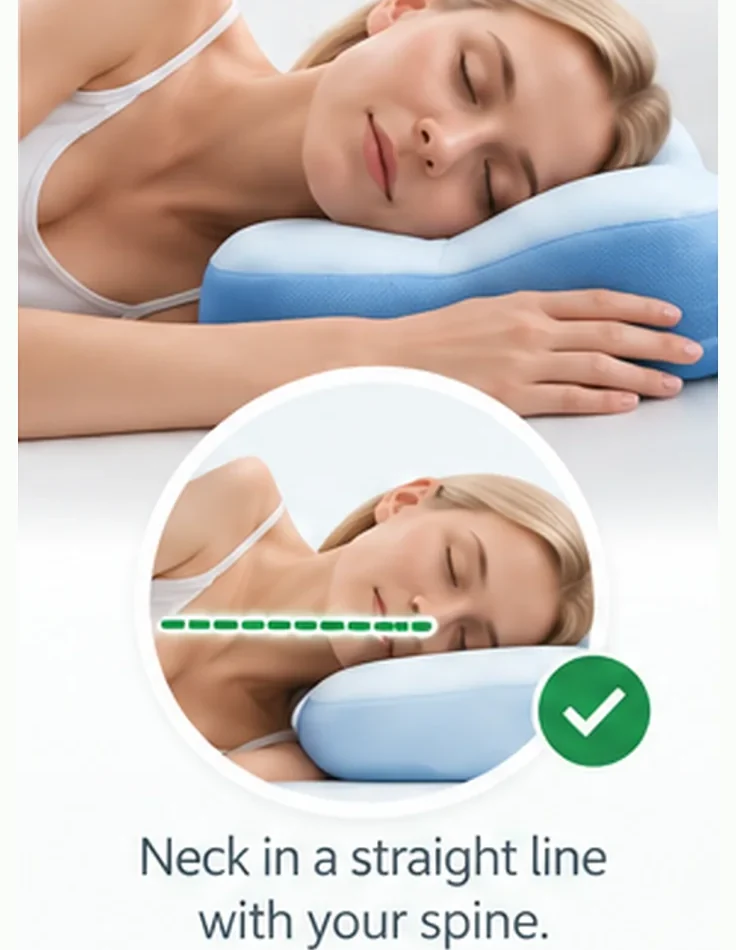
Check head and neck position
On your side, consider whether your head is tilted toward or away from the mattress. On your back, notice whether the pillow pushes your chin forward or leaves your head feeling unsupported.
Notice pressure and effort
Does the pillow feel comfortable without you having to keep pushing it into place? Are you tempted to fold it, bunch it or remove part of the fill to get comfortable? Those are useful clues about fit and adjustability.
Repeat in other common positions
If you switch between your back and side, test both. A pillow that feels good in only one position may be a poor match for how you actually sleep.
Track comfort over several nights
One night is not a definitive test, especially when a pillow has a new shape or feel. Follow the seller’s trial and return rules, and stop using a pillow that clearly worsens symptoms.
Common buying mistakes
- Choosing by firmness alone. A firm pillow may still be the wrong height or shape.
- Assuming an ergonomic shape must be better. A contour helps only if its proportions and feel suit you.
- Ignoring return conditions. Read the return window, hygiene restrictions, shipping costs and refund terms before buying, especially online.
- Using the uncompressed product height as the answer. How the pillow behaves under your head is what you experience.
- Expecting a pillow to fix every source of pain. Neck symptoms may relate to posture, an injury or another health issue; a pillow is only one part of the picture.
When should you seek medical advice?
A pillow change may help you feel more comfortable, but neck pain has many possible causes. If pain or stiffness does not improve after a few weeks, keeps returning, or worries you, seek advice from a qualified health professional. The UK NHS also advises seeking assessment when neck pain comes with symptoms such as pins and needles or a cold arm. Follow local emergency advice for severe or rapidly worsening symptoms, weakness, significant injury or other concerning changes.
See the NHS neck-pain guidance for a fuller list of when to get help. Do not delay assessment in an attempt to solve persistent or significant symptoms by changing pillows alone.
Frequently asked questions
What is the best pillow for neck support?
The best choice depends on your sleep position, body proportions, mattress and preferences. Start with a pillow that feels comfortable and keeps your head and neck in a neutral position; do not choose by shape or marketing category alone.
Are contoured pillows better for neck support?
They can work well for people who like a defined neck area and whose body fits the contour. Others may find the shape or height restrictive. Try to confirm the dimensions and return policy before buying.
Is a firm pillow always more supportive?
No. Firmness is only one feature. Height, compression, shape and how the pillow works with your mattress also matter.
What pillow should side sleepers choose?
Many side sleepers start by looking for enough height to fill the gap between the head and mattress while keeping the head in line with the torso. The needed loft varies with shoulder width, mattress sink and pillow compression. See our guide to pillows for side sleepers.
Can a pillow cure neck pain?
A pillow cannot be promised to cure neck pain. The right fit may improve comfort for some people, but persistent, recurring or concerning symptoms should be discussed with a qualified health professional.
How long should I try a new pillow?
There is no universal adjustment period. Follow the maker’s trial conditions and care instructions, check fit over more than one night if comfortable to do so, and stop using it if symptoms clearly worsen.
- Ohio State Health & Discovery: How to Choose a Pillow (Discusses comfort, pillow height and head-and-neck position.)
- Harvard Health: Say “Good Night” to Neck Pain (Explains sleep-position and pillow considerations for neck comfort.)
- NHS: Neck Pain and Stiff Neck (General self-care information and when to seek medical advice.)
- Sleep Foundation: Best Sleeping Position for Neck Pain (Additional context on sleeping positions and pillow alignment.)
This article is general consumer information, not medical advice, and is not the result of laboratory or clinical testing. Pillow comfort and fit vary from person to person. Product features, return terms and prices can change; verify current details with the seller before buying.