
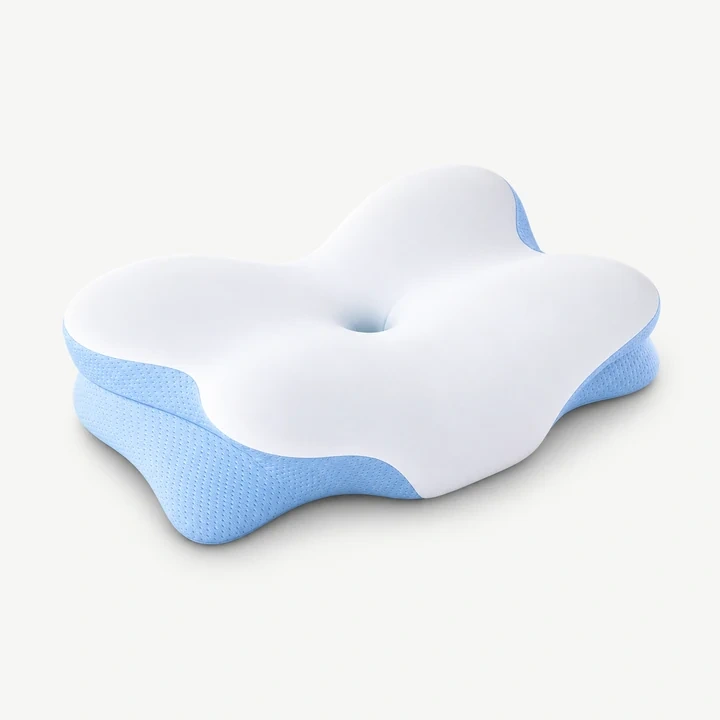
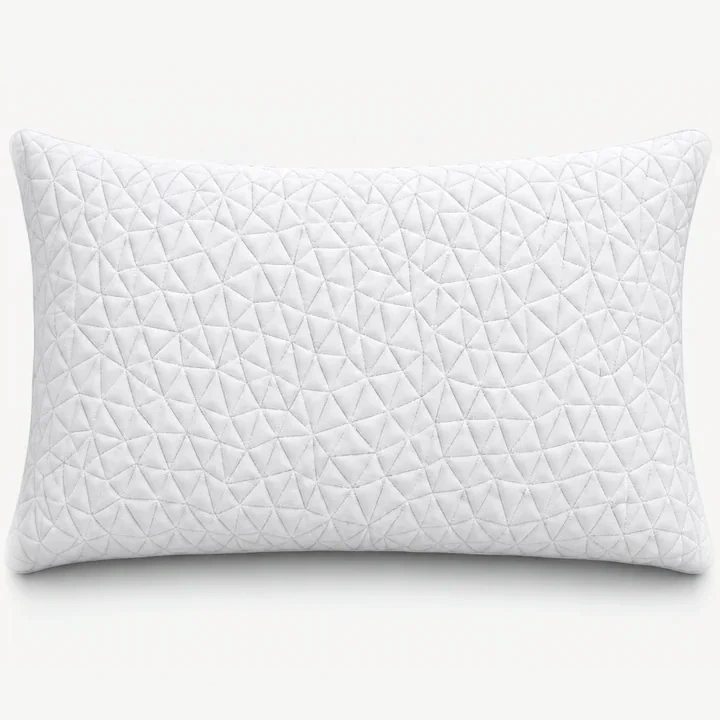
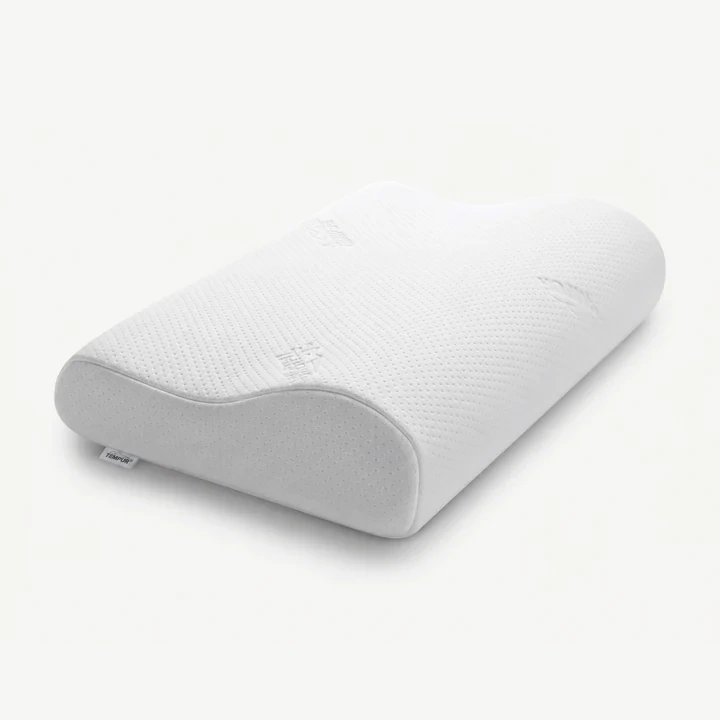
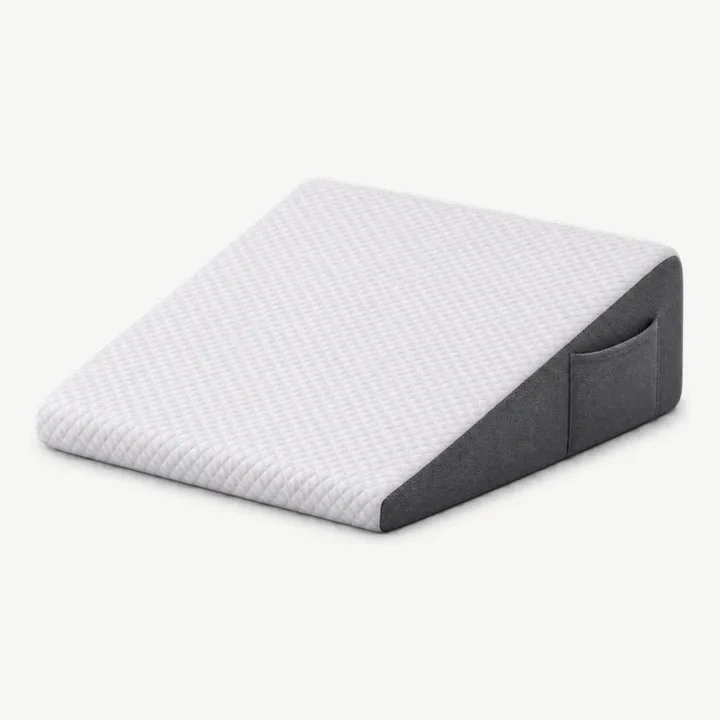
Start with your primary sleep position, then adjust for your mattress, shoulder width, preferred feel and how much the pillow compresses. A pillow that looks thick on a shelf can feel much lower once your head is on it.
What to Consider When Choosing a Pillow
Use the four checkpoints below to turn your main sleep position into a practical shortlist. Test how a pillow compresses on your usual mattress, and compare its adjustability and feel instead of relying on a product photo or a single advertised feature.
A practical way to narrow the choices
Identify your main sleep position
Side, back and stomach sleepers create different gaps between the head, neck and mattress. Combination sleepers should start with the position they spend the most time in.
Choose a starting loft
Think about how much height you need rather than choosing a pillow because it simply looks “plush.” The useful question is how much support remains once the fill compresses.
Match the feel to your preference
Firmness affects how strongly the pillow pushes back and how much your head sinks. Support and firmness are related, but they are not exactly the same thing.
Check the materials and cooling features
Memory foam, latex, down, fiber fills and adjustable shredded materials behave differently. Covers, ventilation and construction can also change how warm a pillow feels.
Choose a Pillow Based on Your Sleeping Position
Sleep position is one of the strongest starting points for pillow selection because it changes the distance between your head and the mattress. The goal is not to force your body into a rigid position; it is to choose a pillow that supports a comfortable, neutral-feeling posture for the way you naturally sleep.
On narrow screens, swipe to scroll. With a keyboard, focus the table and use the arrow keys to see every column.
| Sleep position | Typical starting point | What to pay attention to |
|---|---|---|
| Side | Medium to high loft; supportive feel | Filling the space between head and mattress, especially around the shoulder. |
| Back | Medium loft; balanced support | Avoiding a pillow that pushes the head too far forward or lets it fall too far back. |
| Stomach | Low loft; softer feel often preferred | Keeping the head from being lifted too far above the mattress. |
| Combination | Versatile or adjustable loft | Finding a compromise that works across your two most common positions. |
These are starting points, not rules. Body proportions, mattress firmness, pillow construction and personal preference can all shift the ideal setup. Sleep Foundation similarly notes that sleep position is an important consideration, while the interaction between loft, firmness and the mattress changes how a pillow feels in practice.
Side sleepers
When you sleep on your side, your shoulder creates a larger gap between the mattress and the side of your head. A relatively taller, supportive pillow can help fill that space. The exact height depends on shoulder width and how much your mattress allows the shoulder to sink.
Compare the best pillows for side sleepers →
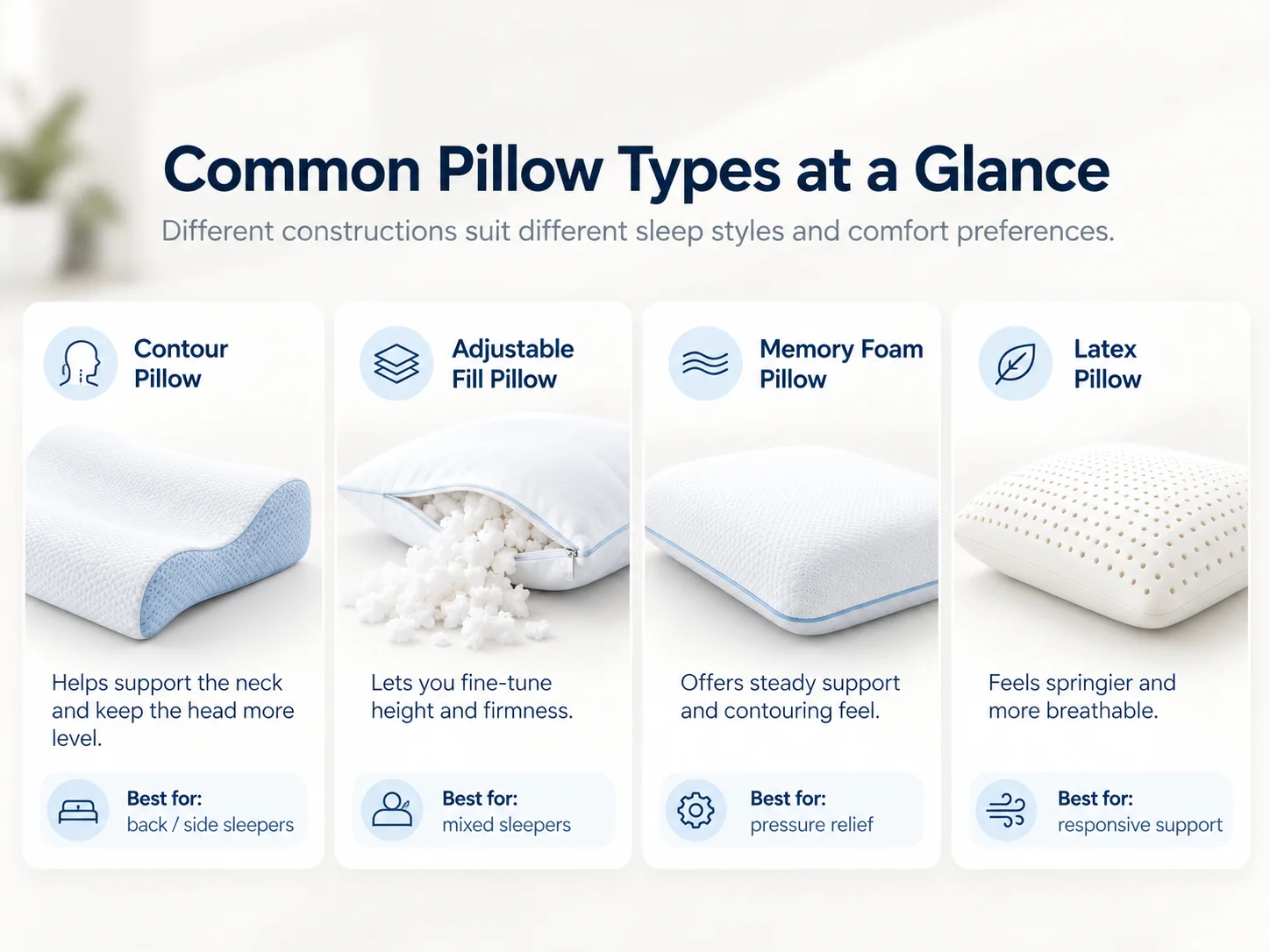
Look for a pillow that holds enough height under load rather than one that only measures tall when untouched. A contoured pillow can also make sense when you like a more defined shape, while an adjustable pillow can be useful when your preferred height is difficult to predict.
Back sleepers
Back sleepers generally need less loft than side sleepers because the head is closer to the mattress. A medium-height pillow is a common starting point, but too much height can feel as though it tips the head forward.
Support should feel stable without creating pressure. The best fit is often a pillow with enough structure to hold its shape while still cushioning the head.
Stomach sleepers
Stomach sleepers typically need the least pillow height because the head is already close to the mattress. A low-loft pillow can reduce the amount of lift created beneath the head. Some people who primarily sleep on their stomach prefer an especially thin pillow or no pillow at all.
Because stomach sleeping often involves turning the head to one side, comfort and personal tolerance matter more than a fixed thickness rule. A bulky pillow that feels fine for side sleeping can be too intrusive in this position.
Combination sleepers
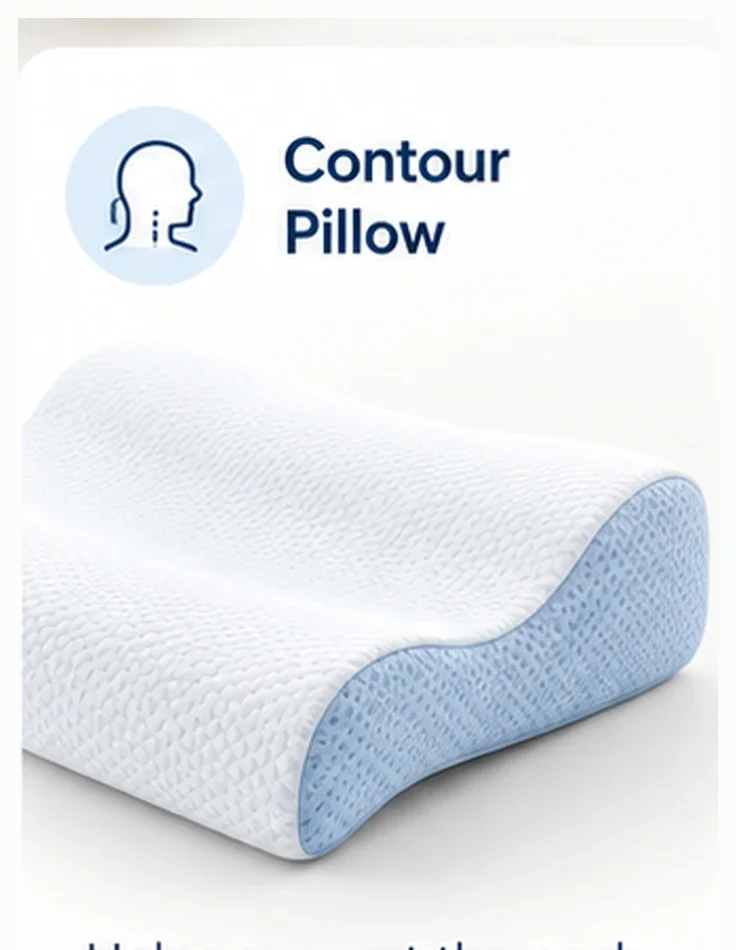
If you switch between positions during the night, an adjustable pillow can be particularly practical because you can tune the fill rather than buying a separate pillow for every position. A medium or moderate starting loft is often a useful compromise, but your primary position should guide the final adjustment.
Pillow Height and Loft
Loft is the pillow’s height or thickness. It is not the same thing as firmness. A tall, soft pillow can compress dramatically, while a thinner but firmer pillow can maintain more of its shape beneath your head.
For a simple starting framework, you can think of loft as low, medium or high. The exact cutoffs vary by manufacturer. One widely used framework describes low loft as under 3 inches, medium as roughly 3–5 inches, and high as over 5 inches. Treat those numbers as categories rather than a guarantee of how a specific pillow will feel after compression.
For side sleepers, higher lofts often make sense because more space must be filled. Back sleepers commonly start around medium loft. Stomach sleepers usually start lower. Mattress firmness can shift those starting points because a softer bed lets the body sink more deeply, leaving less space for the pillow to fill.
When comparing pillows, look beyond the listed height. Ask how the fill behaves under the weight of your head, whether the construction holds its shape, and whether the manufacturer offers adjustable fill or multiple heights.
Firmness and Support
Firmness describes how a pillow feels when you press or lie on it. Support describes how effectively it maintains a useful position beneath your head and neck. A firm pillow is not automatically supportive, and a softer pillow is not automatically unsupportive.
Solid memory foam and latex often feel more structured than very soft fiber or down-style fills, but construction matters. Thickness, fill amount, layering and shape can change the result substantially even within the same material category.
When assessing firmness, consider what happens after several minutes rather than only the first few seconds. If the pillow collapses quickly, the initial height may not be the height you actually sleep on. If it pushes too strongly against your head, the problem may be excessive firmness rather than insufficient support.
Pillow Materials
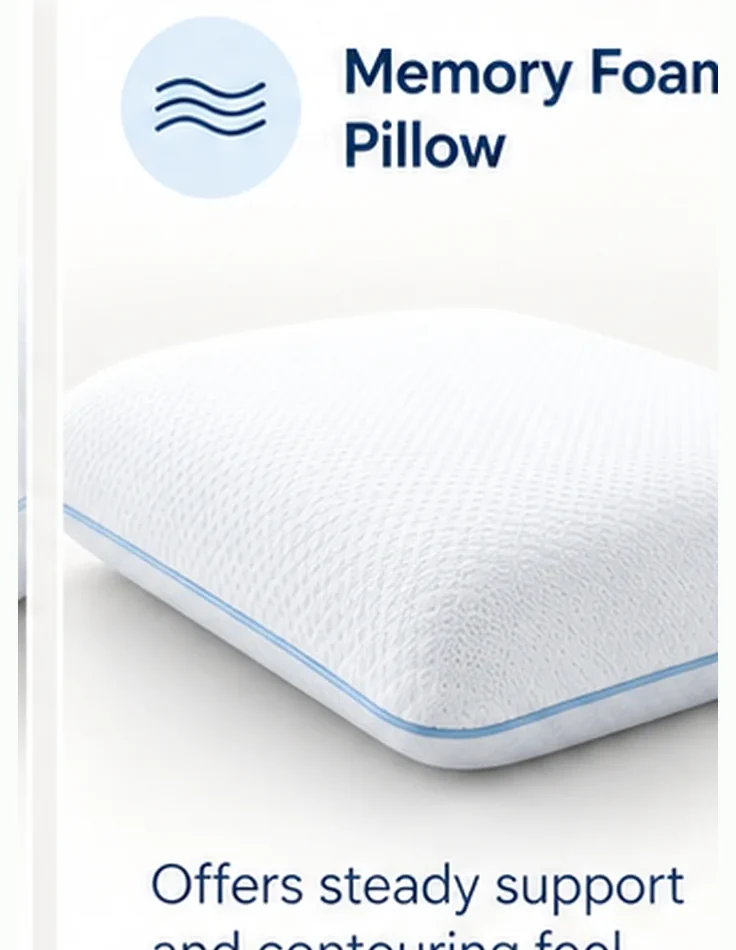
Memory foam
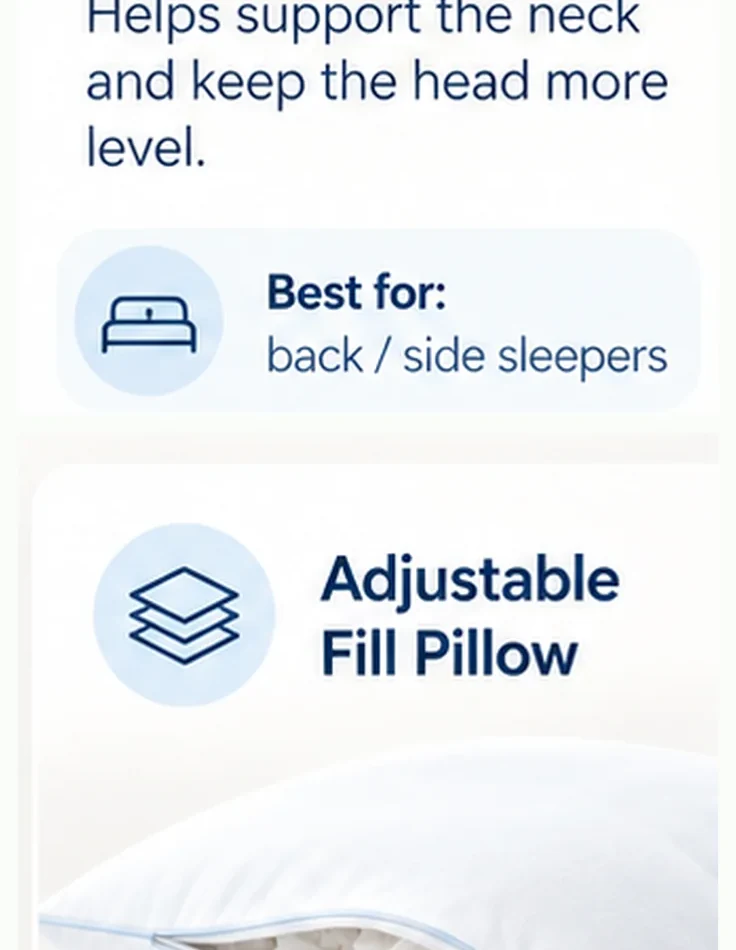
Memory foam can provide a defined, contouring feel and is available in both solid and shredded constructions. Solid foam tends to hold a more consistent shape, while shredded foam can allow more movement and, in adjustable designs, changes in loft. Foam formulations and ventilation vary, so “memory foam” alone does not tell you whether a pillow will feel soft, firm or cool.
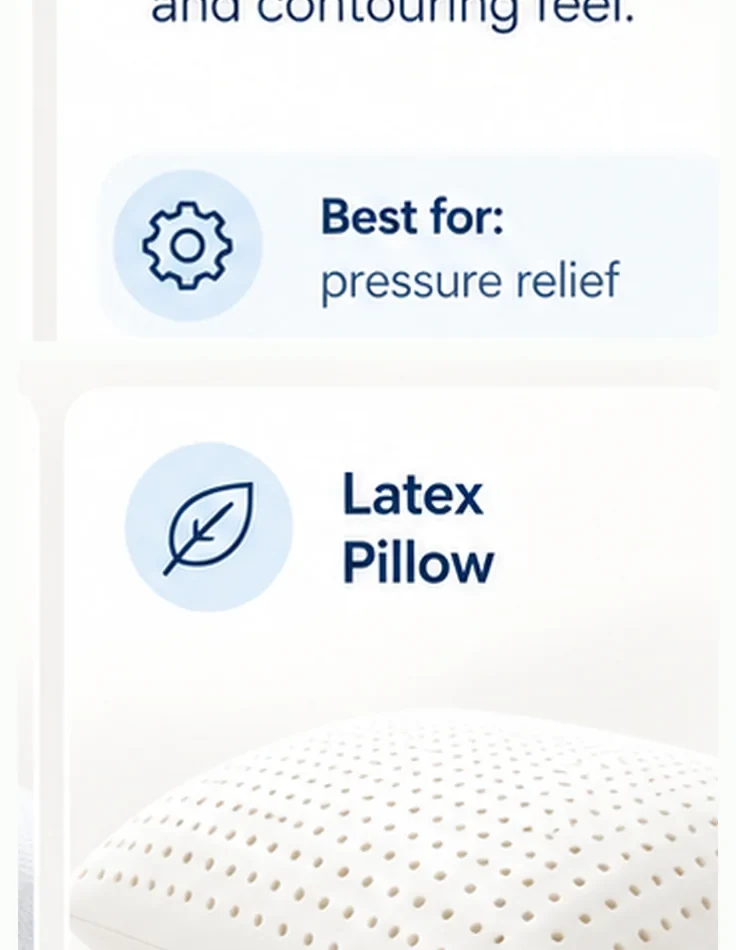
Latex
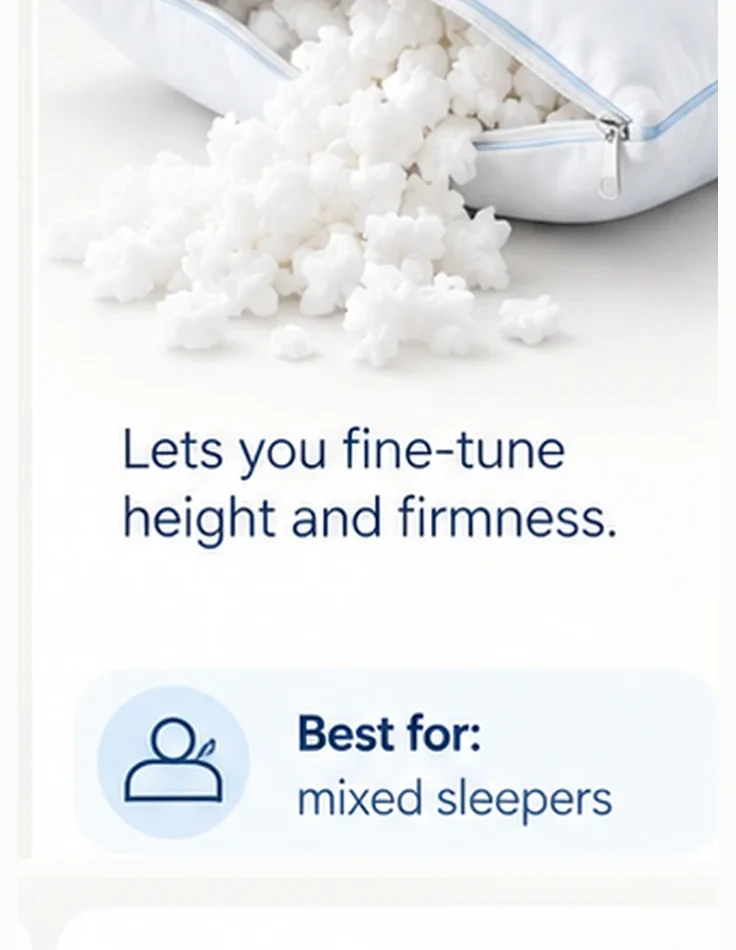
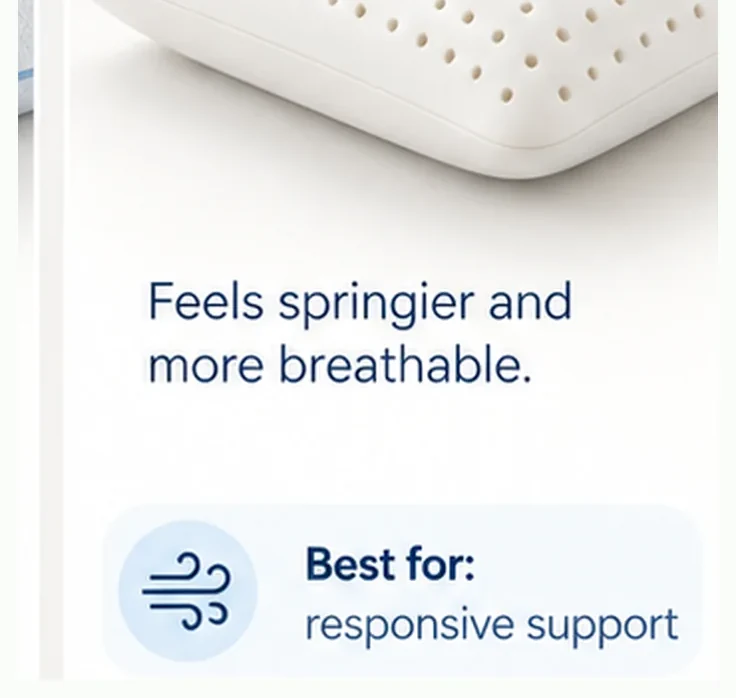
Latex is generally springier and more resilient than viscoelastic memory foam. It can provide a buoyant feel and maintain shape well. Latex pillows may be made from different latex formulations and constructions, so firmness, contour and airflow can vary.
Down and down-alternative fills
Down and down-alternative pillows can feel soft and moldable. They are often appealing to sleepers who like a less structured, more traditional pillow feel. Their loft can change noticeably with compression, so measurements taken before use may not reflect the support you experience overnight.
Fiber and other fills
Polyester and other synthetic fibers are common in affordable and washable pillows. Some are plush and compressible, while others are engineered for more resilience. Buckwheat and other specialty fills create a different, often more structured feel and can have distinct noise and texture characteristics.
Cooling and Breathability
If you tend to sleep warm, look at the entire pillow rather than a single “cooling” label. The fill, outer cover, ventilation channels, surface fabric and how much the pillow compresses can all affect how warm it feels.
Dense foam can feel warmer in some constructions because it restricts airflow, but manufacturers also use perforation, ventilation, cooling covers and other design features. Natural and synthetic fibers also behave differently. The practical takeaway is to assess the construction as a whole and treat marketing terms as clues rather than guarantees.
Adjustable vs. Fixed Pillows
An adjustable pillow lets you add, remove or reposition some of the fill so you can change loft and sometimes firmness. This can be valuable when you are unsure of your preferred height or when you change sleeping positions.
Fixed-height pillows are simpler: the shape and fill are predetermined. That can be a benefit when you already know what you like and want consistent feel without ongoing adjustment.
| Choose adjustable if… | Choose fixed if… |
|---|---|
| You are unsure of your ideal loft. | You already know the height and feel you prefer. |
| You change sleep positions. | You want a consistent, defined shape. |
| You want to fine-tune support at home. | You prefer a simpler, lower-maintenance setup. |
How Your Mattress Affects Pillow Choice
Your mattress changes the distance your head sits from the sleep surface. On a softer mattress, your shoulder and upper body may sink farther into the bed. On a firmer mattress, you generally sink less. That means the same pillow can feel noticeably different after you switch mattresses.
Side sleepers may notice mattress sink most because it changes the shoulder-to-head gap. For a fuller explanation, see our side-sleeper guide and pillow-height guide.
This is one reason to avoid choosing a pillow purely from a product photograph or a single height specification. Think about the pillow as part of your complete sleep surface.
Signs Your Pillow May Not Be the Right Fit
A pillow mismatch often becomes obvious through repeated patterns rather than one bad night. Look for signs such as:
- Your head feels pushed noticeably forward or allowed to drop too far back.
- You frequently need to fold, bunch or reposition the pillow to feel supported.
- The pillow feels tall when you first lie down but collapses substantially after a short period.
- You wake up feeling that one side of the pillow is no longer supporting you consistently.
- You move between sleeping positions and the pillow only feels comfortable in one of them.
- The material or cover makes you feel too warm even though the height feels right.
None of these signs automatically proves that the pillow is “wrong.” They are prompts to reassess loft, firmness, shape, material or the interaction with your mattress.
How We Compare Ergonomic Pillows
The main comparison rates five criteria: Ergonomic Design (30%), Support & Loft (30%), Comfort & Cooling (15%), Flexibility (15%) and Value (10%). Value considers the listed one-pillow price, shipping and published purchase terms. Ratings are qualitative; we do not calculate a composite numerical score.
Our ratings are qualitative editorial judgments based on published product information, specifications, materials, features, pricing and available manufacturer policies. They are not laboratory measurements or medical evaluations, and we do not claim hands-on testing that we did not perform.
The practical lesson from this guide is the same one that guides our comparison: a pillow can be excellent in one dimension and still be a poor personal fit. Your sleep position, mattress, preferred feel and adjustment needs should all play a role in the final decision.
A five-question shortlist
Does the shape have a clear purpose?
Look for a design that explains how it is intended to support the head and neck rather than choosing a shape simply because it looks different.
Will the loft still work after compression?
Compare usable height and support, not just the pillow’s measurement before you lie on it.
What should you expect for temperature and feel?
Consider the fill, cover, ventilation and overall construction together rather than relying on a single “cooling” or “soft” label.
Does it fit your main sleep positions?
Check whether the shape and height suit the position you use most, and whether adjustability is useful when you change positions.
Does the price make sense for what you get?
Compare materials, construction, useful features and available return or warranty terms alongside the purchase price.
Read the full methodology behind our ergonomic pillow comparison →
FAQ
How do I choose the right pillow height?
Start with your sleep position, then adjust for shoulder width, mattress firmness and how much the pillow compresses. Side sleepers usually start higher than back sleepers, while stomach sleepers usually start lower.
Is a firmer pillow always better for support?
No. Firmness and support overlap, but they are not identical. A pillow can feel firm yet have an awkward shape or height, while a softer pillow can still provide useful support when the construction and loft are right for you.
What type of pillow is best for side sleepers?
A relatively taller, supportive pillow is a common starting point because side sleeping creates more space between the head and mattress. Contoured and adjustable designs can be useful depending on your preferences.
Is memory foam a good pillow material?
It can be. Memory foam offers a range of shapes and feels, from highly contoured solid foam to adjustable shredded constructions. The right choice depends on the specific design, firmness, height and temperature characteristics.
Should I choose a pillow based on my mattress?
Yes. Mattress firmness changes how far your body sinks and therefore changes the gap the pillow needs to fill. Pillow and mattress choices work together rather than independently.
Can one pillow work for several sleep positions?
Yes, particularly when the pillow has an adaptable shape or adjustable fill. A combination sleeper may prefer a compromise loft or a pillow that can be tuned for different positions.
We used established sleep and clinical guidance as background for general principles such as loft, sleep position, firmness and mattress interaction. Product recommendations on The Final Pick follow our editorial methodology.
View the 70% offer on Derila’s site. Check the final price and shipping before buying.
We may earn a commission if you buy through this link.
Editorial note: This guide is for general consumer information. It does not provide medical advice or a diagnosis.