
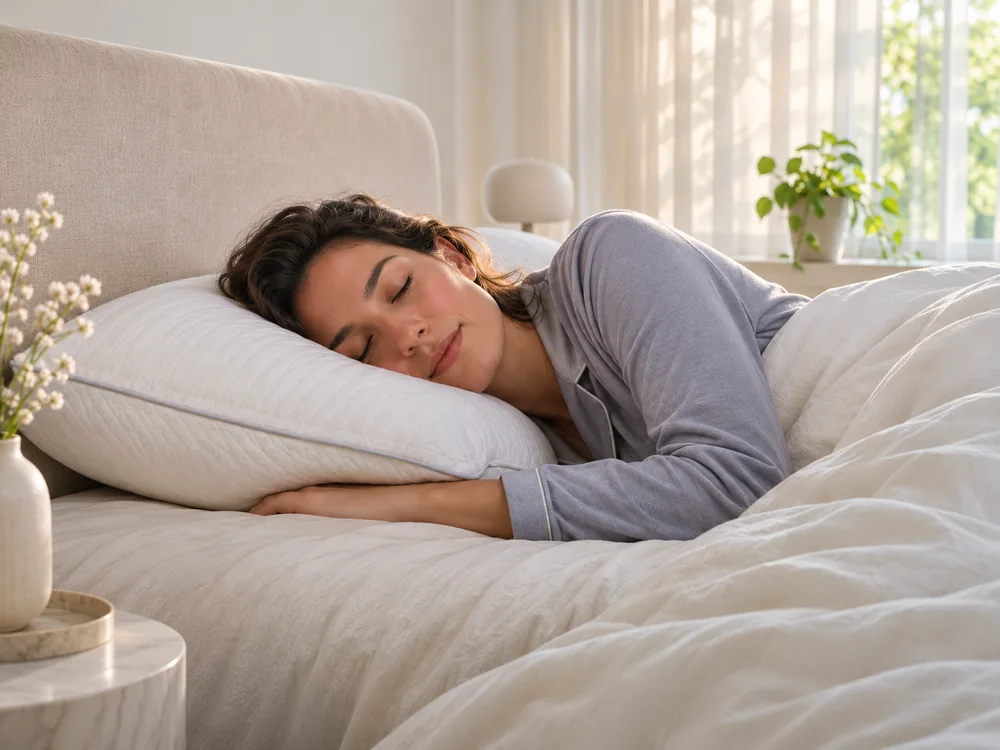
Can a different pillow help with snoring?
Sleep position is the more evidence-supported starting point. Snoring occurs when soft tissues vibrate as air moves through a narrowed upper airway. For some people, sleeping on the back makes this worse. The NHS recommends trying side sleeping and mentions special pillows or wedges that help people stay on their side. Mayo Clinic also discusses side sleeping and raising the head of the bed as strategies that may help.
What about neck alignment and breathing? A pillow that feels appropriately supportive can make a preferred position more comfortable. But this does not establish that a particular head-and-neck angle, or Derila Ergo itself, opens the airway or prevents snoring. The cause of snoring varies between people.
If you mainly want a molded ergonomic contour, start by comparing Derila Ergo. If the problem is staying comfortable on your side, compare Eli & Elm. If you specifically want upper-body elevation, consider the Helix wedge design. These products serve different needs, and none is a substitute for evaluation of possible sleep apnea.
Start with the change you want to make
Five pillow designs compared for snoring-related comfort
We selected real products with distinct purposes rather than treating every ergonomic pillow as an anti-snoring treatment. Our featured pick is based on everyday contour design and value, not demonstrated reductions in snoring volume, episodes or sleep-apnea severity.
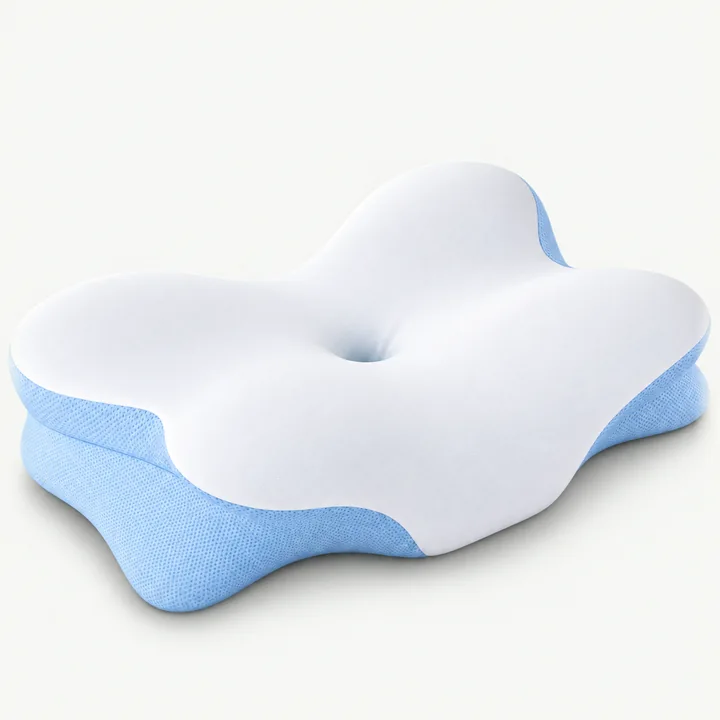
Derila Ergo
A distinctive head cradle with built-in neck and side-support shapes for sleepers who prefer a sculpted contour over loose-fill pillows.
- Best for: Shoppers who want an ergonomic pillow with a defined shape and a straightforward setup.
- Why compare it: Noticeably different shape and a lower listed product price than several premium contour alternatives in our main US comparison.
- Trade-off: Fixed shape and loft. It does not keep you from rolling onto your back, and reduced snoring has not been established.
We may earn a commission if you buy through this link.
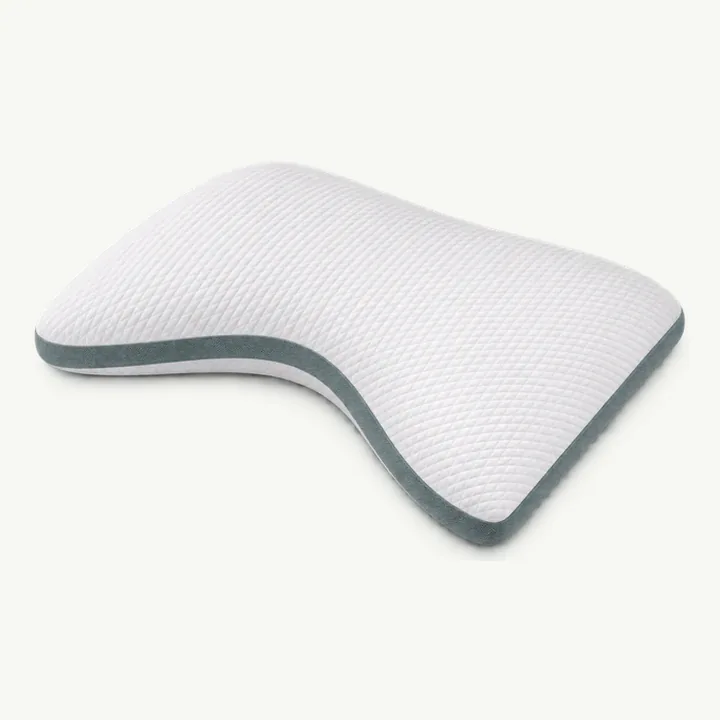
Eli & Elm Side Sleeper
Designed around a curved shoulder opening, with adjustable fill and latex or shredded-foam options.
- Best for: People who already sleep on their side but struggle to position a conventional rectangular pillow.
- Why compare it: Directly addresses side-sleep comfort with a U-shaped cutout and customizable loft.
- Trade-off: Higher listed price and a larger shape that may not suit people who change positions frequently.
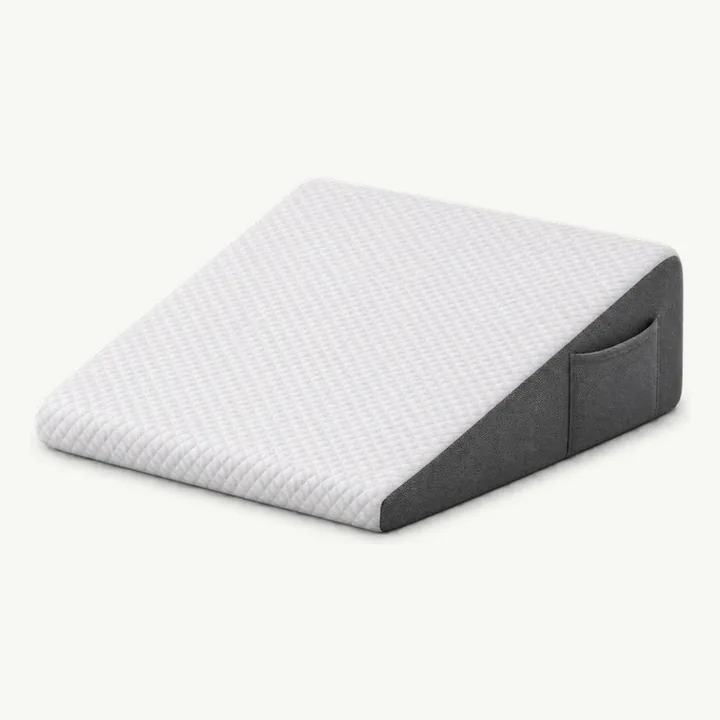
Helix Wedge Pillow
A sloped 24 by 24-inch foam wedge that raises the upper body, a different design approach from a head-only pillow.
- Best for: Shoppers who specifically want a wedge-style elevated sleeping setup.
- Why compare it: Upper-body elevation is a distinct positioning strategy sometimes recommended for snoring.
- Trade-off: Bulkier and firmer than a conventional pillow; elevation is not appropriate for every sleeper.
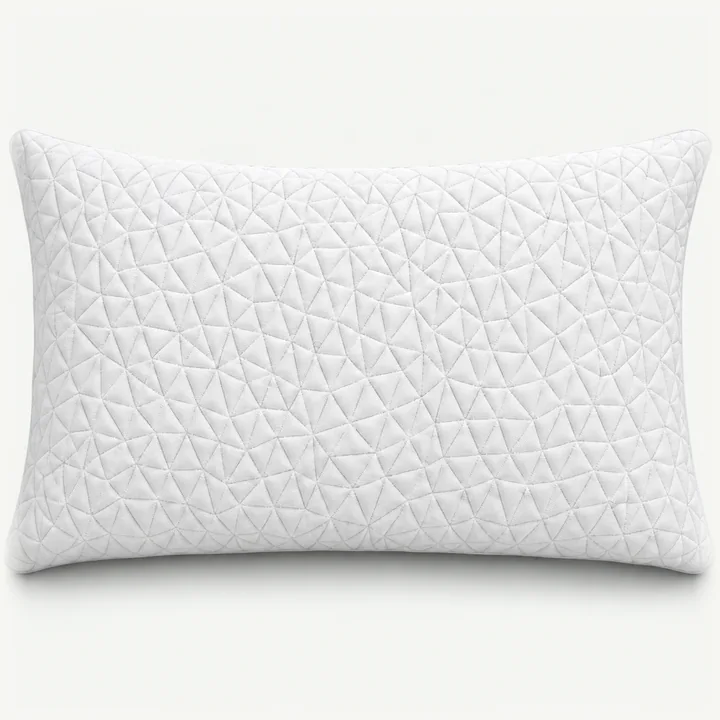
Coop Original Adjustable
A traditional pillow that lets you remove or add fill to explore the height and feel that suits your usual sleeping position.
- Best for: People who are unsure whether their current pillow is too high or too low.
- Why compare it: Height adjustment can make side-sleeping feel more comfortable for some people.
- Trade-off: Takes experimentation and does not provide a molded contour or prevent back sleeping.
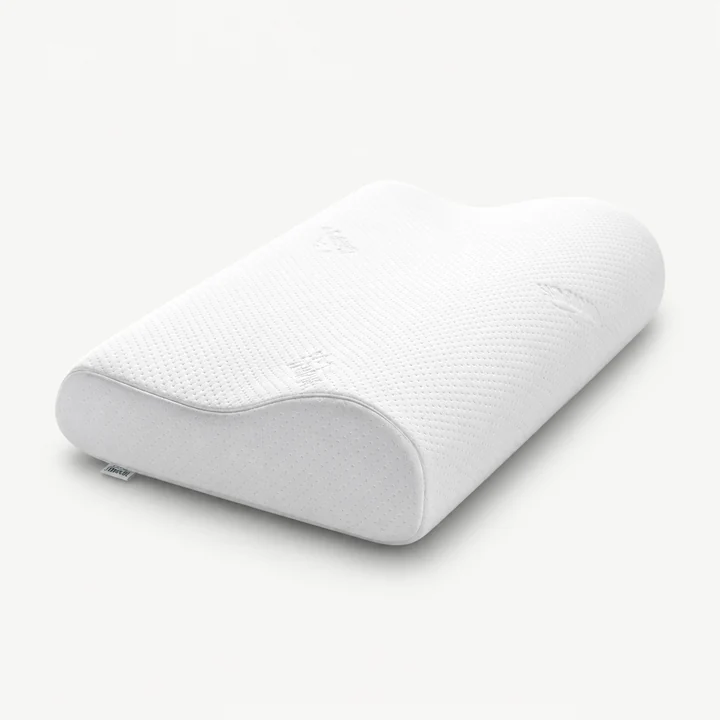
TEMPUR-Neck
A more traditional neck-cradle profile offered in multiple sizes, appealing to shoppers who want a firmer contour.
- Best for: People who prefer a defined cervical shape and can choose the correct size before buying.
- Why compare it: Clear height profiles and a familiar fixed-contour alternative to Derila.
- Trade-off: A firm, fixed contour that requires choosing the right size. Tempur-Pedic says directly purchased pillows generally cannot be returned for a change of comfort preference; damaged or defective items are subject to its policy. Other retailers may have different terms.
| Pillow | Design priority | Main adjustment | Snoring evidence |
|---|---|---|---|
| Derila Ergo | Everyday ergonomic contour | Fixed butterfly shape | No product-specific clinical evidence |
| Eli & Elm Side Sleeper | Side-sleep comfort | U-shaped edge and adjustable fill | Positioning rationale; not product proof |
| Helix Wedge | Upper-body elevation | 10-inch gradual slope | Elevation rationale; not product proof |
| Coop Original Adjustable | Customizable pillow height | Removable fill | No product-specific clinical evidence |
| TEMPUR-Neck | Firmer cervical support | Choose among size profiles | No product-specific clinical evidence |
This table describes physical design and plausible comfort uses. No model here has been shown by our research to prevent snoring.
Why Derila Ergo is our featured ergonomic pick
Distinct contour, clear trade-offs and a practical starting price
Derila Ergo's molded butterfly profile is easy to understand: a central cradle for the head, raised neck-support contours and side wings. For shoppers who are dissatisfied with a soft, shapeless pillow and want a defined form, it is a logical first product to investigate.
In our dated US price comparison, Derila's listed product price was lower than several premium contour alternatives. That supports its value proposition, not a claim that it is medically effective for snoring. The final price, offer terms and return policy should always be confirmed on the seller's page.
It also has limits. Its loft is fixed, it does not create upper-body elevation, and it is not a device intended to prevent a sleeper from rolling onto their back. If side-position training or elevation is your priority, a different design may be more appropriate.
What else can help with snoring?
A pillow is only one part of a sleep setup. There is stronger evidence for some approaches that address the underlying cause of snoring rather than simply changing the pillow's shape.
1. Try a side-sleeping position
For people whose snoring is worse on their back, side sleeping may reduce it. A comfortable pillow may make the position easier to maintain, but an ordinary head pillow does not keep everyone off their back. Dedicated positional aids are a separate category.
2. Consider elevation thoughtfully
Raising the head of the bed may help some people. A foam wedge elevates the upper body rather than simply piling additional pillows under the neck. Suitability depends on comfort and individual health needs.
3. Check other causes and treatment options
Alcohol, nasal obstruction, some medications, body weight and sleep disorders may contribute to snoring. Treatment depends on the cause. Clinician-recommended options can include oral appliances and other treatments for appropriate patients.
Sources: NHS: Snoring · Mayo Clinic: Snoring · Australasian Sleep Association consensus.
Explore related pillow guides
Looking for a different sleep-comfort need? Compare the design features that matter before you buy.
See our main ergonomic pillow comparison or our detailed Derila Ergo review.
Frequently asked questions
What is the best anti-snoring pillow?
No single ordinary pillow has been proven best for stopping snoring. If back-sleeping is part of your problem, side-sleeping or elevation may be useful strategies. Choose a pillow by how comfortably it supports your preferred position and seek evaluation if sleep apnea is possible.
Does a pillow with good neck alignment let you breathe more freely?
Head and neck position can influence the upper airway, but alignment alone does not prove a particular pillow improves breathing or prevents snoring. Comfort and medical outcomes are different questions.
Can Derila Ergo stop snoring?
We have not found reliable product-specific clinical evidence that Derila Ergo stops or reduces snoring. We feature it for its molded ergonomic design and value relative to some premium alternatives, not as an anti-snoring treatment.
Is a wedge pillow better than a contour pillow for snoring?
They serve different purposes. A wedge raises the upper body; a contour pillow supports the head and neck. Some people may benefit from positioning strategies, but neither specific design guarantees less snoring.
What is the difference between snoring and sleep apnea?
Snoring is the sound of vibrating soft tissues as someone breathes during sleep. Sleep apnea involves repeated breathing interruptions and needs appropriate assessment and treatment. Not everyone who snores has sleep apnea, but breathing pauses, gasping and substantial daytime sleepiness are warning signs.
Did you test these pillows overnight?
No. We compared published specifications and intended design features. We did not carry out clinical tests, measure snoring or perform hands-on sleep trials.
Medical background is based on the NHS, Mayo Clinic and an Australasian Sleep Association position statement. Product comparisons draw on public manufacturer descriptions and our existing pillow research, not independently verified efficacy measurements.
- NHS: Snoring causes and practical advice
- Mayo Clinic: Snoring diagnosis and treatment
- Australasian Sleep Association: Position statement for primary snoring
- Eli & Elm: Side Sleeper Pillow specifications
- Helix: Wedge Pillow specifications
- Coop: Original Adjustable product details
- Derila: manufacturer design specifications, not clinical evidence
- TEMPUR-Neck: manufacturer sizes and pillow details
- Tempur-Pedic: direct-purchase return policy
- The Final Pick: How We Compare
This page contains editorial product comparisons, not medical advice or medical efficacy ratings. Published prices and product details may change.
We may earn a commission if you buy through this link.