

Side sleepers often need enough loft to fill the space between the head and mattress, but the tallest pillow is not automatically the best. Shoulder width, mattress sink, how much a pillow compresses and your comfort with its shape all matter. Start with fit under your actual sleeping conditions, not a number on a product page.
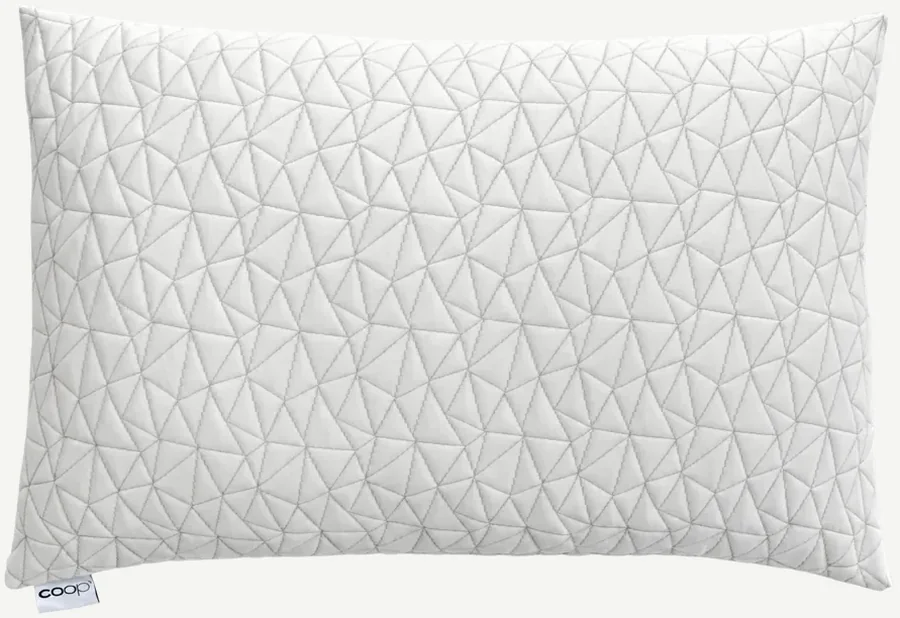
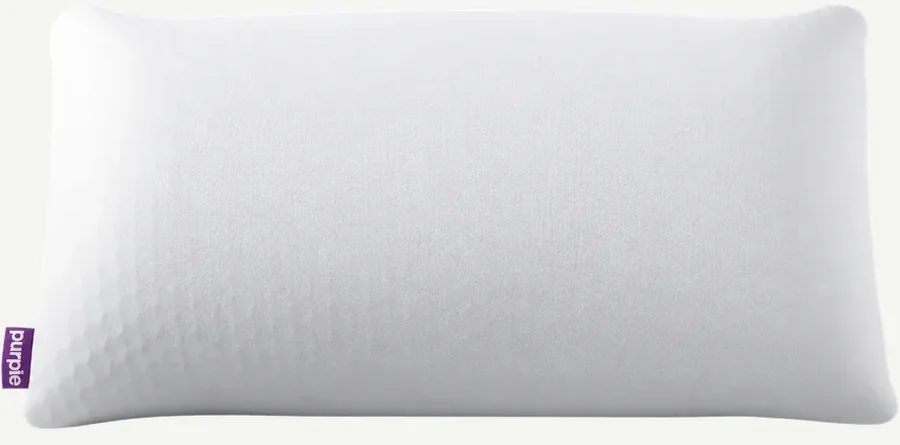
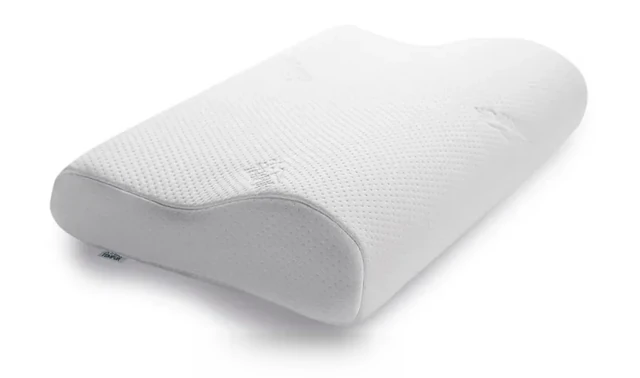
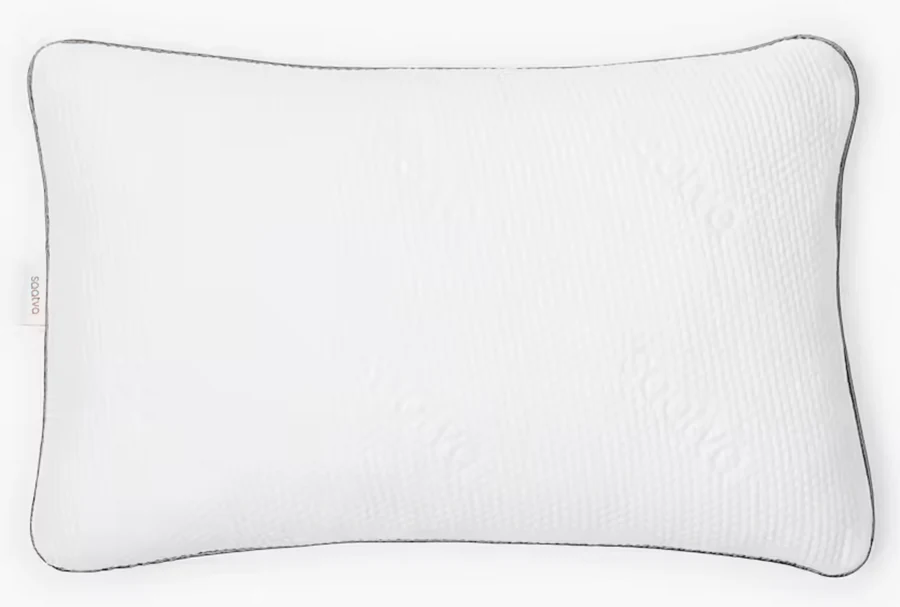
For a fixed butterfly contour, start with Derila Ergo. For adjustable height and fill, compare Coop Original Adjustable. Purple Harmony focuses on responsive, cooling-oriented materials; TEMPUR-Neck has a more structured neck curve; and Saatva offers another premium foam construction. See the five-pillow comparison before deciding which design fits your mattress and sleeping position.
What Side Sleepers Should Look for in a Pillow
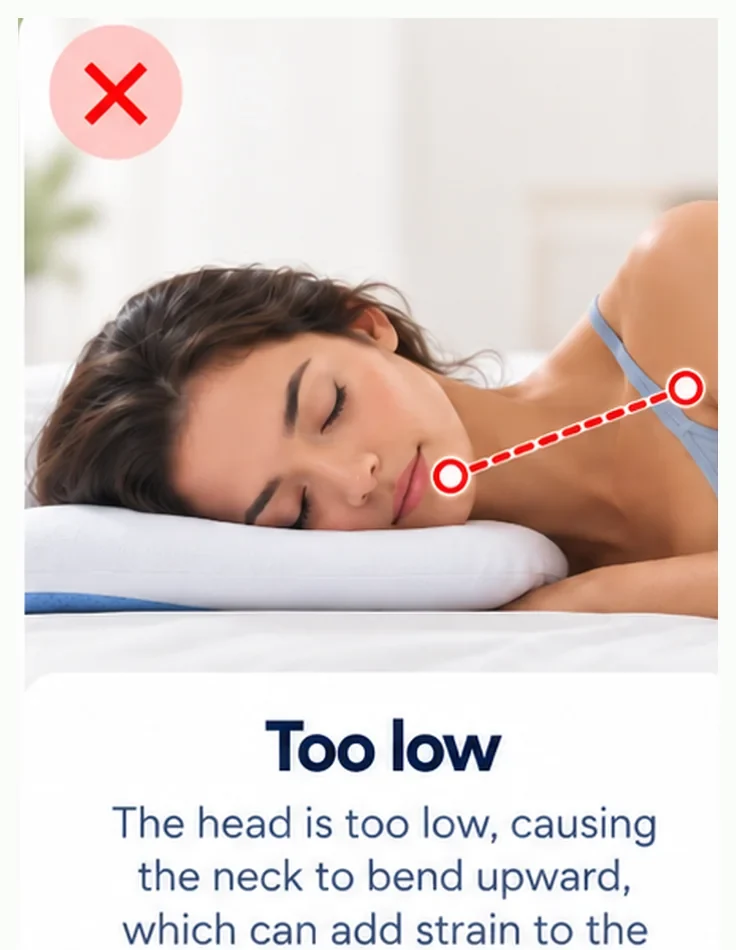
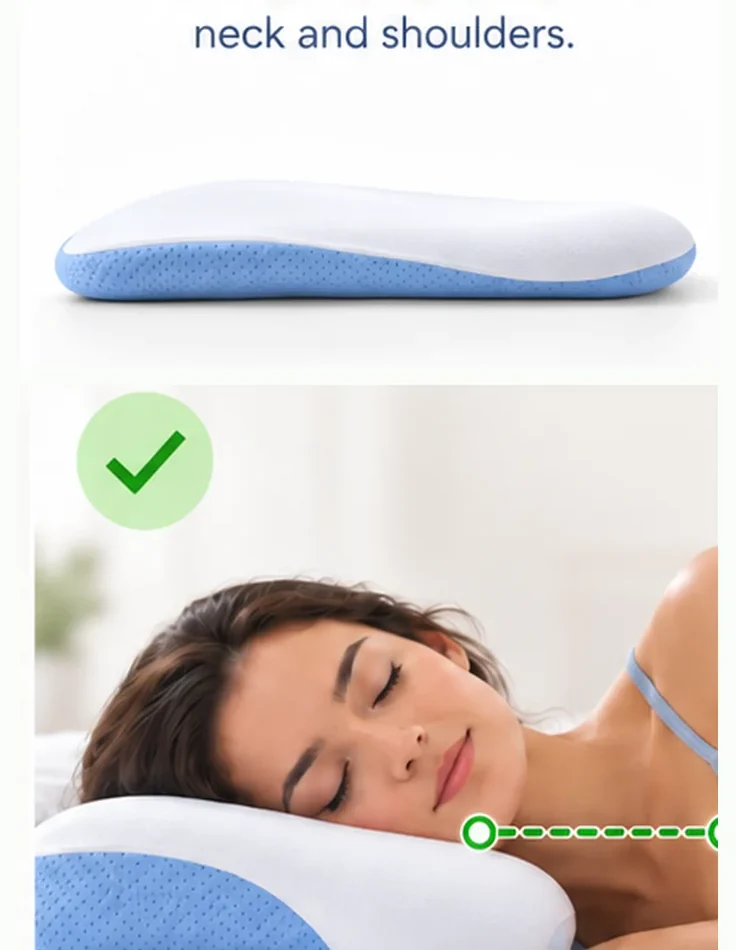
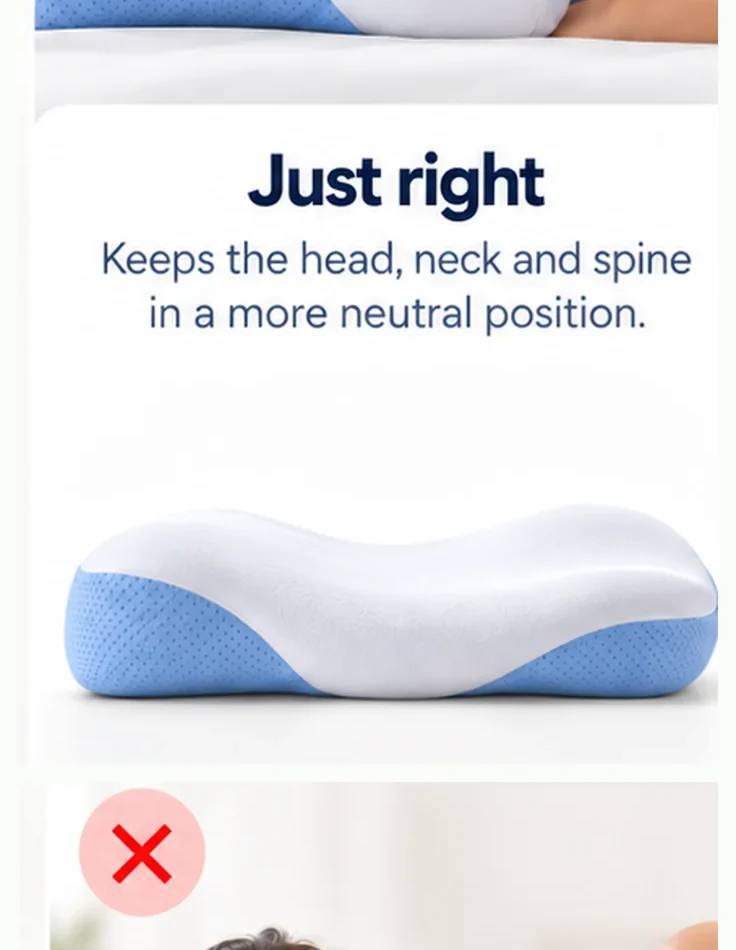
When you lie on your side, the shoulder sits between the mattress and the head, creating a gap that a pillow has to accommodate. A useful starting point is a pillow that supports the head without making it tip noticeably upward or sag toward the mattress. The neck should feel comfortably supported rather than pushed into a position that you have to resist.
There is no single model or height that suits every side sleeper. Two people can sleep in the same position but need different pillows because their shoulder widths, head sizes, mattress firmness, preferred feel and body proportions differ. The way the pillow compresses under load matters as much as its uncompressed height.
This is a side-sleeper-specific shortlist, not the same five models in our general ergonomic-pillow comparison. Here we focus on contour design, adjustable loft, material feel and published specifications relevant to side sleeping; no comparative overnight testing was performed.
Start with the position you actually use
If you spend most of the night on your side, prioritize a pillow that keeps a comfortable height in that position. If you switch between side and back sleeping, you may need a compromise or an adjustable design. If you sleep partly on your stomach, a tall, fixed contour may be less versatile than it first appears.
Think about the whole sleep setup
A pillow does not work in isolation. Your mattress, shoulder position, mattress topper and even how far you pull the pillow beneath your head affect its effective height. Treat a recommendation as a starting point to evaluate, not a guarantee that the same shape will feel right for every person.
Why Pillow Height and Loft Matter
Loft means a pillow's height or thickness. It is different from firmness: a tall, soft pillow may flatten under the head, while a shorter, denser pillow may retain more of its shape. The relevant height is the height you experience when lying down, not just the measurement shown in a product specification.
Side sleepers often begin by considering medium-to-high loft because the shoulder creates more space to fill than it does when sleeping on the back. Sleep Foundation's general pillow guidance also describes sleep position as a key factor in selecting loft. That is a useful starting point, not a universal measurement: shoulder width, body shape, firmness of the mattress and construction can all change the result.



On narrow screens, swipe to scroll. With a keyboard, focus the table and use the arrow keys to see every column.
| Your situation | What to consider | What to avoid |
|---|---|---|
| Broader shoulders | Whether the pillow maintains enough height once your shoulder settles into the mattress. | Assuming a soft, tall pillow will stay tall under load. |
| Narrower shoulders | A lower or more compressible profile may be enough, depending on your mattress and head position. | Choosing the highest model simply because you sleep on your side. |
| Soft mattress | Your shoulder may sink farther, reducing the gap the pillow needs to fill. | Using a height recommendation without considering sink. |
| Firm mattress | Your shoulder may sink less, leaving more space to support between head and mattress. | Judging fit while testing on a different bed. |
| Changes position at night | A shape and loft that remain comfortable when you roll partly onto your back. | A highly specialized contour that feels awkward outside one position. |
Height labels such as low, medium and high are useful for narrowing a shortlist, but brands do not always use identical definitions. Also check whether the pillow has one fixed shape, several height choices or adjustable fill. These construction details tell you more than the label alone.
Shoulder Width and Mattress Firmness
Shoulder width is one reason a friend's favorite pillow may not suit you. A wider shoulder can leave a larger gap between the side of the head and the mattress, while a narrower shoulder may leave less space to fill. These are not exact equations: head size, preferred sleeping angle and the amount the pillow compresses also affect the fit.
Mattress feel changes the picture. On a softer mattress, the shoulder can sink farther into the surface, which may reduce the required pillow height. On a firmer mattress, the shoulder may sink less, leaving more space to bridge. A thick mattress topper can alter the feel too, so reassess the pillow if your sleep surface changes.
When testing a possible match at home, use your usual mattress and pillowcase. Lie naturally on your side and give the fill time to settle. Notice whether you feel as though your head is being lifted toward the ceiling or dropping toward the mattress. A comfortable, stable feeling is more useful than trying to force your body to match a diagram or a specific angle.
Firmness Is Not the Same as Support
Firmness describes how hard or soft a pillow feels. Support describes how well it maintains a useful position beneath your head and neck. They influence one another, but they are not interchangeable. A pillow can feel firm and still be the wrong height, while a softer pillow may work if it retains enough loft under your head.
Are Soft Pillows Good for Side Sleepers?
Soft pillows can work for side sleepers, but softness alone is not the deciding factor. The pillow needs to retain enough height under your head to fill the space created by the shoulder without pushing your head upward. If a soft pillow compresses almost flat, it may feel pleasant at first but leave you bunching or repositioning it during the night. If you prefer a plush surface, look for a construction that still maintains usable loft, and judge the fit on your own mattress rather than by the word “soft” alone.
Solid memory foam often provides a more defined, consistent contour. Shredded fill usually moves more and may be adjustable. Latex is commonly more resilient and springy than viscoelastic foam, though each product's construction changes its feel. Fiber or down-style fill can feel more traditional and moldable, but may compress substantially.
For side sleeping, focus on what happens after you settle onto the pillow. Does the surface collapse? Does the shape push against your shoulder? Can you stay comfortable without repeatedly folding, bunching or repositioning it? These observations are more useful than choosing “firm” or “soft” based on a label alone.
Contoured, Traditional or Adjustable?
Contoured pillows
A contoured pillow uses a shaped profile to guide where the head and neck rest. Some have a central cradle, raised sides, a shoulder-facing wing or a neck-support curve. A defined contour may appeal to someone who wants the shape to be built into the pillow rather than created by moving loose fill. The trade-off is that a fixed contour may not match every shoulder width or sleeping style, and its orientation and height matter.
Traditional rectangular pillows
A conventional rectangle can be a good fit if you prefer a familiar feel and have already found a loft that works. Its usefulness depends on how well the fill maintains its height, whether it bunches or flattens, and whether its edges remain comfortable around the shoulder. Traditional shape does not automatically mean less support; construction and fit remain the deciding factors.
Adjustable-fill pillows
With an adjustable pillow, you can add, remove or redistribute fill to change the loft and sometimes the firmness. This can be valuable when you are between two heights or want to fine-tune the fit for different positions. It also takes some trial and adjustment, and changing the fill may change the feel in ways you need to evaluate over several nights.
Choose a defined contour if you specifically want a shaped support profile and its dimensions suit you. Consider adjustable fill if finding the right height is your biggest uncertainty. Choose a traditional shape if you already know the feel and loft you prefer. None of these formats is automatically superior for every side sleeper.
Our Five-Pillow Shortlist for Side Sleepers
Derila Ergo: defined butterfly-shaped contour. Coop Original Adjustable: changeable fill and loft. Purple Harmony: cooling-oriented, springier materials. TEMPUR-Neck: firmer shaped neck profile. Saatva Graphite: premium foam-based construction and loft choices. There is no universal winner. The best match depends on effective height, feel and your mattress.
These five options represent different approaches to side-sleeping fit. The descriptions explain published design features and potential trade-offs. They do not represent measured comfort, cooling or medical results. Check sizes, current availability and purchase terms with each seller.
| Pillow | May suit side sleepers who… | Trade-off to consider |
|---|---|---|
Derila Ergo | Want a purpose-built butterfly-shaped contour with defined head, neck and side-wing areas. | Less fill adjustment than a fully adjustable pillow; structured foam may feel firmer than plush traditional fill. |
Coop Original Adjustable | Want to tune height and feel by adding or removing fill. | Requires personal adjustment and may not provide the same fixed, molded contour. |
Purple Harmony | Prioritize a cooling-focused construction and a distinctive responsive feel. | Its premium materials and particular feel may not suit every preference or budget. |
TEMPUR-Neck | Prefer a defined, firmer neck contour and a choice of height profile. | Its fixed shape is less customizable than loose-fill designs; height selection matters. |
Saatva Graphite Memory Foam | Want a premium alternative with graphite-infused memory foam, breathable shredded foam and latex, and two loft choices. | Compare the available lofts and construction carefully; its profile differs from a purpose-built butterfly contour. |
How Each Option Fits a Different Priority
Derila Ergo: a defined ergonomic shape
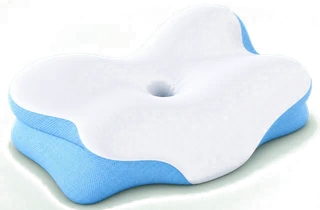
Derila Ergo's documented design centers on a butterfly-shaped memory-foam profile with distinct areas intended to support the head, neck and sides. That makes it the clearest fit in this shortlist for shoppers who specifically want an ergonomic contour built into the pillow. The shape itself is not proof that it will fit every side sleeper: compare its dimensions and supported positions with your own build and sleep habits.
Consider an alternative if your main requirement is to change the fill substantially, if you prefer a very soft and moldable surface, or if you do not get along with shaped pillows. Derila is our featured pick in the main comparison because the guide emphasizes ergonomic design and support. That is not a claim that it was proven best for every side sleeper in a dedicated hands-on trial.
Coop Original Adjustable: control over loft
Coop Original Adjustable stands out for its adjustable fill, which lets a shopper tune the pillow's height and feel rather than committing to a single fixed profile. That flexibility can be useful when your shoulder-to-head gap is difficult to estimate or when you shift between side and back sleeping. Follow the manufacturer's instructions and make adjustments gradually so you can tell whether a change actually improves comfort.
The trade-off is that adjustability requires effort. You need to be willing to experiment, store removed fill safely and check the manufacturer's current instructions for the exact model. If you know you prefer one defined, sculpted shape with no adjustment, a contour pillow may be simpler.
Purple Harmony: cooling-focused construction
Purple Harmony combines the GelFlex Grid with Talalay latex and a moisture-wicking cover, according to the published product description. These are construction features intended to give the pillow a distinctive responsive feel and cooling-focused profile. They may appeal to people who sleep warm or dislike the sensation of dense, slow-moving foam.
Cooling claims are not a guarantee that a pillow will feel cool in every bedroom or for every person. Temperature depends on the room, bedding, cover and personal preference. The materials and premium positioning may also make this a less suitable choice for someone prioritizing a lower price or maximum fill adjustability.
TEMPUR-Neck: a firmer fixed contour
TEMPUR-Neck uses shaped TEMPUR material and is offered in multiple height profiles for side and back sleepers. It may suit someone who prefers a clearly defined neck curve and a more structured feel. Check the manufacturer's sizing guidance carefully: selecting the appropriate profile is particularly important when the contour is fixed rather than adjustable.
Its main trade-off is flexibility. If you want to add or remove fill, change loft frequently or shift freely between several positions, a fixed contour can feel restrictive. A structured shape may also feel firmer than a traditional fiber pillow, which is a matter of preference rather than a universal quality judgment. If bought directly from Tempur-Pedic, pillows generally cannot be returned simply because the height or comfort is not right. Its published policy allows exceptions for delivery damage or defects; other retailers set their own return terms.
Saatva Graphite Memory Foam: a premium alternative
The Saatva Graphite Memory Foam option is described with graphite-infused memory foam, breathable shredded foam and latex, plus two loft choices. Those features give shoppers a premium alternative to consider when they want a mix of contouring and material variety. Check the current construction details and which lofts are available before comparing it with other pillows.
Its more traditional contouring approach differs from Derila's purpose-built butterfly profile. Which one feels better depends on how you like a pillow to cradle your head and whether you prefer a specific shaped design or a different material arrangement. Price and return terms should be checked directly with the retailer because they can change.
Match the Pillow to Your Priority
- You want a built-in ergonomic contour: start by examining Derila Ergo's shape and sizing, then compare it with the firmer TEMPUR-Neck profile.
- You are unsure of your preferred height: consider the Coop Original Adjustable because its fill can be tuned.
- You tend to sleep warm: review the construction and cover of Purple Harmony, while remembering that no cooling label guarantees a particular temperature.
- You prefer a premium mix of materials and loft options: compare the available Saatva Graphite Memory Foam profiles and current retailer terms.
- You change positions frequently: prioritize a shape and loft that remain comfortable when you roll partly onto your back; adjustment may be useful, but test the actual pillow profile.
These are design-based starting points, not results of a comparative sleep trial. This side-sleeper-specific selection differs from the five models in our general ergonomic pillow comparison. For a broader decision framework, see our pillow buying guide.
How to Check the Fit at Home
Use your normal mattress, mattress topper and pillowcase when possible. Give a new pillow time to settle and follow its care and adjustment instructions. A simple check can help you decide what to investigate next, even though it is not a medical assessment.
Lie in your normal side-sleeping position
Relax your shoulder and neck instead of deliberately lifting your head to fit the pillow. Notice whether the head feels pushed upward, tilts down toward the mattress, or rests comfortably.
Check what happens after the fill settles
A pillow may feel tall at first and then compress. Notice whether it keeps a stable, comfortable height, or whether you have to fold, bunch or reposition it repeatedly.
Consider your other common position
If you sometimes sleep on your back, briefly assess whether the contour still feels comfortable when you roll naturally. Do not force a shape to fit a position that feels awkward.
Look for a repeated pattern over several nights rather than judging solely by one night. Check trial and return conditions before buying so you understand what options you have if the fit is not right. Persistent or severe neck, shoulder or other symptoms deserve individualized advice from a qualified health professional rather than relying on pillow selection alone.
How We Selected These Options
We selected these five side-sleeper examples to illustrate distinct choices: fixed contour, adjustable fill, responsive cooling-oriented materials, a structured neck profile and premium foam construction. Selection is based on published product specifications and stated buying terms, not the same group or a weighted numerical ranking used by the general pillow comparison.
Our product descriptions draw on published specifications and product information available for the listed models. We do not present lab measurements, medical evaluations, customer survey results or personal overnight testing that we did not conduct. Manufacturer descriptions may explain intended design, but they should not be interpreted as proof that a pillow will prevent or treat a health condition.
Frequently Asked Questions
What type of pillow is usually a good starting point for side sleepers?
A pillow with enough loft to fill the space between the head and mattress is a common starting point. The exact fit depends on shoulder width, mattress sink, pillow compression and personal comfort. Medium-to-high loft is a guideline, not a universal rule.
Should side sleepers always use a high-loft pillow?
No. A high-loft pillow can be too tall for a person with narrower shoulders, a soft mattress or a preference for more compression. Choose based on the height you experience while lying on your usual sleep surface.
Is a firm pillow better for side sleeping?
Not automatically. Support and firmness are related but different. A pillow should maintain a useful height and feel comfortable for you; excessive firmness or the wrong shape can still be a poor fit.
Are adjustable pillows good for side sleepers?
They can be useful when you are unsure how much loft you need, because the fill can be adjusted. They require some experimentation and are not the only route to a good fit; a fixed contour can work if its shape and height suit you.
Are contoured pillows always better than rectangular pillows?
No. A contour can provide a defined shape, while a rectangular pillow may offer a familiar feel or more flexibility. The important question is how the particular pillow supports your head in your natural position.
Which pillow is best for every side sleeper?
There is no universal winner. The five options in this article have different strengths: a built-in ergonomic shape, adjustable fill, cooling-focused materials, a firmer fixed contour or a premium material mix. Your sleep setup and preferences determine which trade-off is most useful.
Did The Final Pick conduct a hands-on side-sleeper test?
No. This guide applies our existing editorial comparison and published product information to side-sleeper needs. It is not a claim of lab testing or a new overnight test with side sleepers. Our criteria and limitations are explained in the methodology.
General pillow-fit guidance is listed first. The manufacturer references below identify the sources for each design, not independent performance tests. Product information was checked November 5, 2026.
- Sleep Foundation: Best Pillows for Side Sleepers
- Sleep Foundation: How to Shop for Pillows
- Sleep Foundation: Pillow Research Methodology
- Derila Ergo: Derila Support, standard-model measurements, and Derila Ergo user guide for shape and materials.
- Coop Original Adjustable: Coop Sleep Goods, Original Adjustable Pillow, official Classic model listing (adjustable fill; size and shape vary).
- Purple Harmony: Purple, Harmony Pillow, official specification page (GelFlex Grid, Talalay latex, selectable heights).
- TEMPUR-Neck: Tempur-Pedic, TEMPUR-Neck Pillow, official model and sizing page; Return Policy, direct-purchase pillow exclusions.
- Saatva Graphite Memory Foam: Saatva, Graphite Memory Foam Pillow, official product specification and loft options.
This guide is general consumer information, not medical advice, diagnosis or treatment. Specifications, availability, pricing, promotions and retailer policies can change; verify current details with the manufacturer or retailer before purchasing.
View the 70% offer on Derila’s site. Check the final price and shipping before buying.
We may earn a commission if you buy through this link.